DSS: Redefining Biotechnology & Life Science in India
































Advancements in Clonality Testing: Revolutionizing Hematologic Oncology
The immune system, one of the most intricate networks in the human body, tirelessly protects us from pathogens such as bacteria, viruses, fungi, and more. While a healthy immune system ensures defense and health, any compromise can lead to diseases, autoimmune conditions, allergies, or even cancer. Clonality testing, a crucial advancement in hematologic oncology, has transformed how these diseases are diagnosed and managed.
Understanding the Immune System and Clonality
The immune system operates through two primary defense mechanisms:
The adaptive immune system relies heavily on white blood cells, specifically B cells and T cells, which originate in the bone marrow. While B cells mature in the bone marrow, T cells complete their maturation in the thymus. A healthy immune system can generate a polyclonal population — a diverse range of B and T cell clones. This diversity is essential for recognizing and responding to the myriad of antigens encountered throughout life.
- Innate Immunity: Present from birth, this provides a rapid, nonspecific response to pathogens.
- Adaptive Immunity: Developed over time, this offers specific responses to particular pathogens.
The adaptive immune system relies on B cells and T cells—white blood cells originating in the bone marrow. While B cells mature in the bone marrow, T cells complete their development in the thymus. A healthy immune system produces a diverse, polyclonal population of these immune cells, ensuring robust recognition of a wide array of antigens. However, a monoclonal population—the uncontrolled expansion of a single cell clone—often indicates malignancies like leukemia and lymphoma.
Clonality Testing: Evolution and Techniques
The Birth of Clonality Testing
The concept of hematological malignancies being clonal emerged from observing uniform cell populations and identifying distinct groups through immunopathological techniques, as illustrated in Figure 1. Early methods focused on detecting monoclonal antigens and chromosomal rearrangements in antigen-receptor genes [Rezuke et al., 1997].
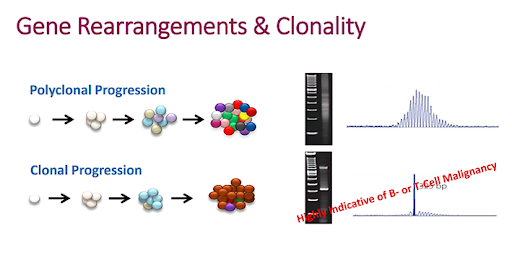
Figure 1: Polyclonal vs Clonal Populations
From Southern Blotting to PCR
Traditionally, clonality testing relied on Southern blotting to detect rearrangements in immunoglobulin (IG) and T-cell receptor (TCR) genes. However, advancements in molecular diagnostics have positioned polymerase chain reaction (PCR) as the gold standard. PCR offers high sensitivity, specificity, and rapid turnaround, making it invaluable for identifying clonal rearrangements where conventional techniques like morphology and immunohistochemistry (IHC) fall short.
Key advantages of PCR-based clonality testing include:
- High sensitivity and specificity.
- Ability to analyze small or degraded samples, such as formalin-fixed paraffin-embedded (FFPE) tissues.
- Rapid and reproducible results.
Next-Generation Sequencing (NGS): The Future of Clonality Testing
Modern assays like Invivoscribe’s LymphoTrack®, shown in Image 2, developed for leading NGS platforms, have revolutionized clonality testing. Leveraging NGS technology, these assays provide unmatched accuracy and detailed insights into clonal populations. Key benefits include:
- High-precision identification of clonality.
- Detailed sequence analysis, including somatic hypermutation rates.
- Monitoring measurable residual disease (MRD) to assess therapy response and remission.
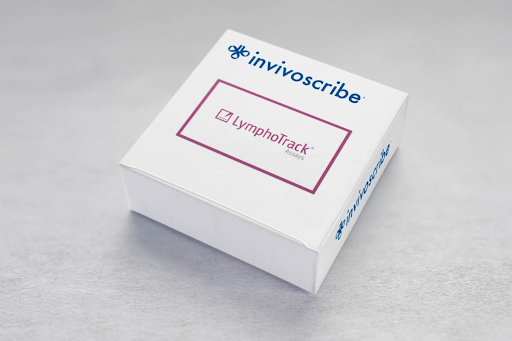
Image 2: Invivoscribe’s LymphoTrack® Assays Kit
The Role of Minimal Residual Disease (MRD) in Treatment
MRD testing is critical for assessing relapse risk and overall survival in stem cell transplantation (SCT) patients. By tracking clonal populations, MRD testing:
- Pre-transplant: Predicts relapse risk and survival outcomes. MRD-negative patients generally have better prognoses.
- Post-transplant: Identifies patients at higher relapse risk, enabling timely interventions.
Invivoscribe is at the forefront of MRD testing, offering advanced NGS-based solutions for both lymphoid and myeloid conditions. These tools, including specialized kits and bioinformatic software, enable researchers to track and analyze genetic mutations with unmatched precision.
Invivoscribe: Pioneering Clonality Testing
Comprehensive Solutions
Invivoscribe delivers a wide range of PCR-based solutions, as illustrated in Flow Diagram 3, for studying hematologic malignancies, including:
- Assays for B- and T-cell gene clonality and rearrangements.
- Point mutation assays for FLT3 ITD and TKD.
- Chromosome translocation assays using gel detection, ABI fluorescence, and NGS platforms like MiSeq and Ion S5.
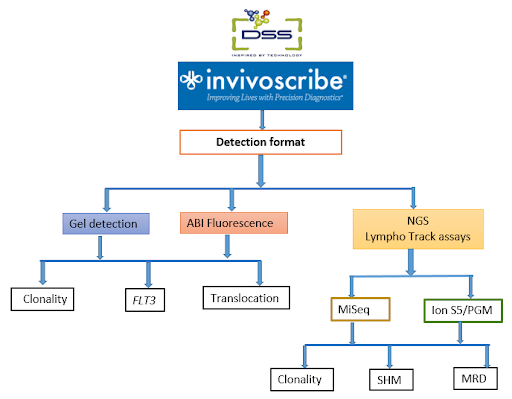
Flow Diagram 3: Clonality Solutions from Invivoscribe
Cutting-Edge Tools
Invivoscribe’s LymphoTrack® assays integrate seamlessly with key NGS platforms, enabling detailed tracking of genetic changes. These tools detect conserved elements within bioengineered CAR-T and TCR constructs, allowing for dual applications:
- Tracking immunotherapeutic constructs in peripheral blood.
- Monitoring clonotypes associated with malignant B- and T-cell populations.
Innovations for Researchers
Key products include:
- LymphoTrack Low Positive Control (RUO): Provides accurate estimates of rearranged cell equivalents.
- LymphoQuant Internal Control (RUO): Ensures reliable tracking of genetic changes in longitudinal studies.
Clinical Applications and Future Directions
Distinguishing between benign and malignant lymphoid proliferations remains challenging in 10-15% of cases. Combining clonality testing with clinical, morphological, and genetic data enhances diagnostic accuracy. Invivoscribe’s LymphoTrack® MRD Bundled Solution—including assay reagents, controls, and bioinformatics software—empowers clinicians to:
- Confirm clonality.
- Track disease progression.
- Monitor treatment response with precision
As clonality testing evolves from Southern blotting to NGS, its role in precision oncology continues to expand. These advancements not only improve disease classification but also pave the way for more targeted therapies, transforming the landscape of cancer care.
Learn More
Curious about how Invivoscribe’s solutions can elevate your hematologic oncology testing and research? Contact us at [email protected] to explore our cutting-edge products and services.
Transform your research. Revolutionize patient care. Discover the future of clonality testing with Invivoscribe.
Latest Articles

International Women’s Day – Prioritising Women’s Health for a Healthier...
BY Ms. Sohini Chatterjee, Application Specialist, DSS Imagetech 7th March 2026
In 2013, one public disclosure transformed the global conversation around women’s health. When Angelina Jolie revealed in a New York Times op-ed that she carried a BRCA1 mutation and had...
Read More
How BX51WI Microscopes Support High-Resolution Neural Imaging
BY DSS Imagetech Pvt Ltd 24th February 2026
Picture this scenario. It’s 6:00 PM on a Friday. You have spent the last six hours harvesting tissue. You perfused the mouse perfectly, the liver cleared instantly, and the brain...
Read More
The Role of Research & Development in Driving Scientific Innovation
BY DSS Imagetech Pvt Ltd 24th February 2026
Human progress is not an accident. The leap from a simple medicinal herb to a targeted biologic drug, from a magnifying glass to a digital microscope, or from a basic...
Read More