DSS: Redefining Biotechnology & Life Science in India






























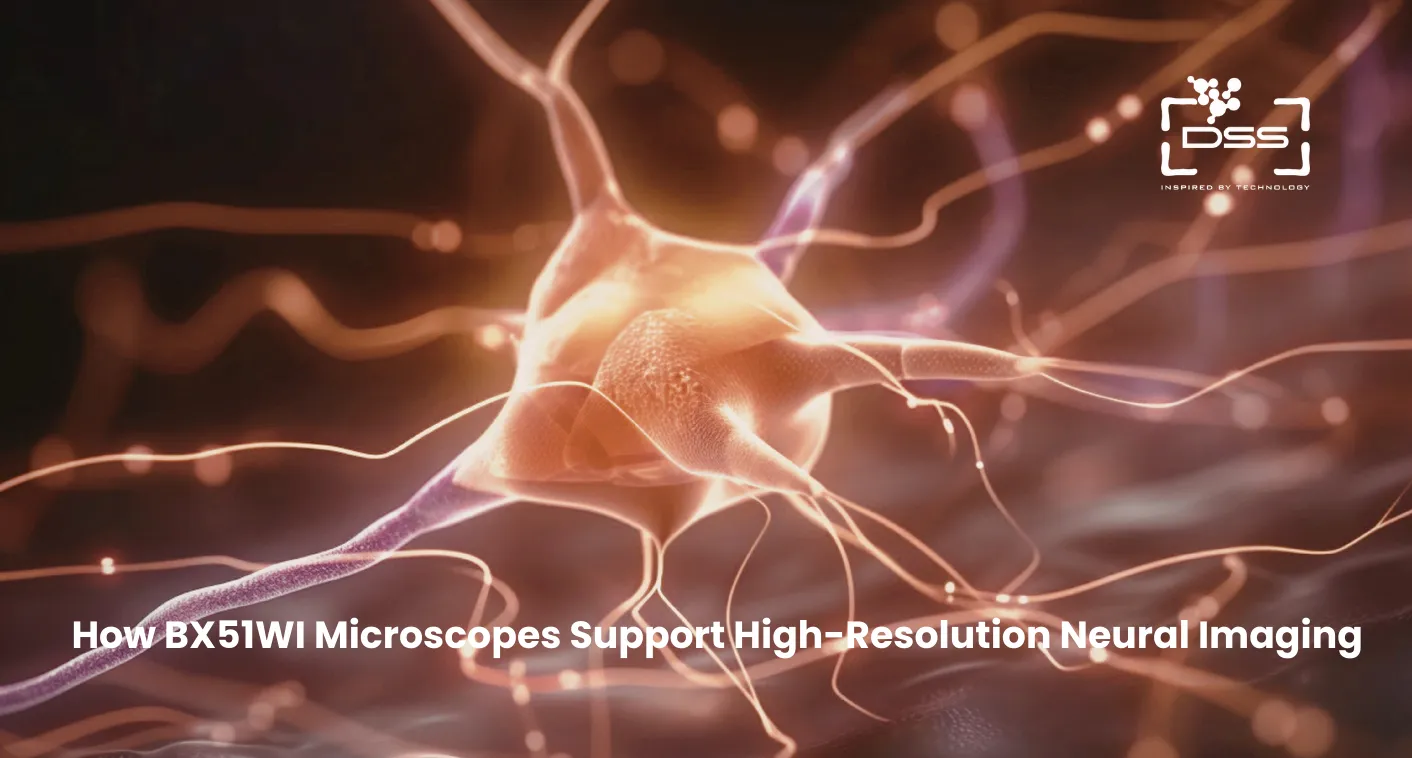
How BX51WI Microscopes Support High-Resolution Neural Imaging
Picture this scenario. It’s 6:00 PM on a Friday. You have spent the last six hours harvesting tissue. You perfused the mouse perfectly, the liver cleared instantly, and the brain was firm and pale. You sliced the hippocampus on the vibratome with the precision of a diamond cutter. The slices are healthy, resting in the holding chamber like precious gems.
You are at the rig. You navigate your recording micropipette through the tissue, dodging the sticky, treacherous glial cells that threaten to clog your tip. You find a beautiful pyramidal neuron in the CA1 layer. You apply gentle suction. Pop. You get the Giga-ohm seal. You break in. You are whole-cell. The series resistance is low; the cell is healthy.
You lean back to take a sip of coffee. Someone down the hall slams a door. On your oscilloscope, the baseline shudders. The seal resistance plummets from 2 GΩ to 200 MΩ. The cell swells. The recording is dead.
That isn’t bad biology. That is bad physics.
This is the nightmare of “drift” and vibration. In high-resolution neural imaging and electrophysiology, your enemy is rarely the neuron itself. It is the building you are standing in. You are trying to record millivolt signals from a structure smaller than a dust mote, while the ventilation system hums, the elevator moves, and trucks drive by outside.
When you are working at this scale, your microscope stops being just a visualization tool. It becomes the structural anchor of your entire experiment.
This is why, despite the flashiness of new automated systems, the Olympus BX51WI remains a non-negotiable piece of hardware in serious neurobiology labs. It is not the newest microscope on the market. It doesn’t have an iPad controller. But it possesses something far more valuable: mass.
The “What” and “Why”: Moving from Anatomy to Function
Why write a manifesto about a microscope frame that has been around for years? Why does this matter now?
It matters because the fundamental questions of neuroscience have shifted, and the hardware hasn’t always kept up.
Ten years ago, much of the imaging was anatomical. We asked, “Where does this axon go?” For that, you could use a standard upright microscope. You could take a fixed slide, put it on a stage, focus by moving the stage up and down, and take a picture. If the stage moved 2 microns, who cared? The sample was dead.
Today, we are asking, “How does this neuron compute information in real time?”
We are doing live cell neural imaging. We are doing patch-clamp electrophysiology. We are combining optogenetics with electrical recording. In this world, moving the stage is a cardinal sin.
Here is the physics of the problem: If your microscope focuses by moving the stage (which 95% of biological microscopes do), it moves the sample. However, your recording electrode is held by a micromanipulator that sits on the table, independent of the stage.
- Action: You turn the focus knob to see the cell better.
- Reaction: The stage drops 50 microns. The sample drops 50 microns. The electrode stays where it is.
- Result: You have just ripped the electrode out of the neuron. Experiment over.
The BX51WI Microscope (WI stands for Water Immersion) was engineered with a singular, obsessive philosophy: Fixed Stage Physiology.
On this rig, the stage is bolted down. It is immovable. When you turn the focus knob, the nosepiece (the heavy turret holding the objectives) moves up and down. This simple inversion of mechanics decouples the optical path from the physical sample. It allows you to focus through the entire z-depth of a brain slice without disturbing the delicate mechanical connection between your pipette and the cell membrane.
If you are a PI looking to stretch a grant or a postdoc trying to build a rig that actually works, understanding the specific mechanics of the BX51WI is your competitive advantage. It bridges the gap between affordable optics and the high-resolution microscopy requirements of modern functional imaging.
Pillar 1: The Fixed Stage Doctrine (Engineering Stability)
Let’s dive deep into the mechanics. Many manufacturers claim “fixed stage,” but the BX51WI implements it with a level of over-engineering that borders on paranoia.
The Nosepiece Focus Mechanism
Standard microscopes move the stage because the stage is light. Moving the nosepiece is hard, it’s heavy. It holds multiple objectives, prisms, and sliders. Moving that much mass vertically without it “slipping” or “creeping” due to gravity requires a complex gear system.
The BX51WI uses a specialized roller guide mechanism for the nosepiece focus.
- Why this matters: When you focus on a dendrite to check for spines and then let go of the knob, the image must stay exactly there. Cheaper mechanisms suffer from “focus creep,” where the weight of the objective slowly pulls the focus down over minutes. In a 30-minute recording, focus creep ruins your data. The BX51WI holds its Z-position with an ironclad grip.
The “Click-Stop” Vibration Problem
If you have ever used a standard lab microscope, you know the satisfying “click” when you rotate the objective turret. That click is a spring-loaded detent locking the lens in place.
In neurobiology imaging, that “click” is a seismic event.
If you are recording from a cell and you decide to switch magnification, perhaps to check the position of a second electrode, that mechanical shockwave travels through the frame, down the stage, and into the chamber and vibrates the slice.
The BX51WI features a dampened, click-free nosepiece. You can disengage the detent mechanism. This allows you to rotate the turret smoothly, like a fluid bearing. You can switch from a 5x air objective (for placement) to a 60x water immersion objective (for patching) without a single vibration reaching your sample.
The “Bridge” Architecture
While the microscope itself is stable, how you mount it defines your success. The BX51WI is rarely bolted directly to the optical table in a high-end rig.
Instead, we use what is called a “translation stage” or “microscope bridge.”
- The Setup: The sample chamber and the manipulators are bolted to the vibration isolation table. They never move. The BX51WI is mounted on a massive XY gantry that straddles the sample.
- The Benefit: You move the entire microscope to look at different parts of the brain slice.
- The Reality Check: Many labs try to save money by buying a moving XY stage for the slice chamber. Do not do this. If you move the chamber, you have to move your manipulators with it, which is a nightmare of coordination. Always move the scope; never move the biology.
Pillar 2: Optical Supremacy (Piercing the Fog of Tissue)
Stability is nothing if you can’t see what you are doing. This brings us to the optics. Brain tissue is notoriously difficult to image. It is thick, fatty, and scatters light.
If you look at a 300-micron acute brain slice under a standard brightfield microscope, you won’t see neurons. You will see a grey, undifferentiated fog. You certainly won’t see the clean edge of a membrane needed to land a patch pipette.
The BX51WI supports the two critical technologies required to pierce this fog: IR-DIC and high-NA water immersion.
1. Infrared Differential Interference Contrast (IR-DIC)
This is the magic trick of slice electrophysiology.
- The Physics: Visible light (400-700 nm) scatters aggressively in tissue. Infrared light (770-900 nm) has a longer wavelength, allowing it to penetrate deeper into the slice without scattering.
- The Contrast: DIC uses a Wollaston prism to split polarized light, pass it through the sample, and recombine it. This converts gradients in optical density (like the edge of a cell) into relief-like contrast.
When you combine these (IR light + DIC optics), the grey fog disappears. Suddenly, you can see neurons 100 microns deep in the slice. They look like they are embossed in 3D. You can distinguish healthy cells (smooth, plump membranes) from unhealthy ones (shriveled, visible nuclei).
Key Hardware Note: To do this on a BX51WI, you need specific components:
- An IR-compatible polarizer.
- The proper Wollaston prism for your specific objective (they are matched pairs).
- An IR filter (usually 775 nm or 900 nm) in the light path.
- An IR-sensitive camera (standard color cameras will not see this image).
2. The Cult of the 20x and 60x Water Objectives
You cannot use oil immersion on a live slice (it’s messy and toxic). You cannot use air objectives (refractive index mismatch causes aberration). You must use water.
Olympus created the XLUMPlanFL N series specifically for this microscope, and they are widely considered the gold standard in the field.
- Numerical Aperture (NA): The 20x objective has an NA of 1.0. This is insanely high for a 20x lens. It gathers a massive amount of light, which is critical for fluorescence neural imaging of faint signals.
- Working Distance: These objectives have a working distance of 2.0 mm. This is the “air gap” between the lens tip and the focal point. You need this gap. Why? Because you have to fit your recording electrodes under the lens. Standard objectives have working distances of 0.2 mm; you would crush your pipette instantly.
- Ceramic Tips: The tips of these objectives are made of ceramic, not metal. This is a subtle but crucial detail. Metal tips act as antennas, picking up electrical noise from the environment and feeding it into your recording bath. Ceramic is electrically inert.
Pillar 3: Fluorescence and the “Switcher” Dilemma
Modern neuroscience is rarely just electrical. It is genetic. We use transgenic mouse lines where parvalbumin interneurons glow red (tdTomato) or pyramidal neurons express GCaMP (green).
You need to switch between fluorescence (to find the targeted cell type) and IR-DIC (to patch it).
On a lesser microscope, this is a pain point.
- You turn on the fluorescent lamp to find your green cell.
- You identify the target.
- You switch the filter turret to “Brightfield” to patch it.
- The Vibration: The turret creates a mechanical jerk. The scope shakes.
- The Shift: The optical registration between the fluorescence path and the DIC path is slightly off. The cell you saw in green is not exactly where you see it in DIC. You patch the wrong cell.
The BX51WI solves this with high-precision filter turrets and an optional linear slider mechanism. The linear slider is smoother than a turret and allows for a more seamless transition between modes.
Furthermore, the frame is rigid enough to support heavy external light sources.
- Old School: Mercury Arc Lamps. These are hot and dangerous and generate electrical noise.
- New School: High-power LEDs (like CoolLED or ThorLabs). The BX51WI accepts these easily via the rear collimator. LEDs are instant-on/off, meaning you don’t need a mechanical shutter banging open and closed every time you want to take a picture. This further reduces vibration.
Spiky Point of View: If you are buying a BX51WI today, do not accept a Mercury lamp house. It is obsolete tech. Negotiate for an LED adapter. If the seller insists on Mercury, walk away or ask for a discount to buy your own LED system.
Pillar 4: Ergonomics and The “Approach Angle”
This is a section you won’t find in the sales brochure, but it is the first thing a veteran electrophysiologist looks for.
It’s called the approach angle.
When you are patching a cell, you aren’t coming in from the top. You are coming in from the side, usually at a 30- to 45-degree angle relative to the table. You have to slide your glass pipette under the objective lens and into the bath without hitting:
- The objective lens itself.
- The condenser lens is below the stage.
- The walls of the chamber.
The BX51WI is designed with a tapered nosepiece and a “cut-away” stage profile.
- The Swing-Out Condenser: The condenser (the lens below the sample that focuses the IR light) on the BX51WI often comes with a “swing-out” top lens. This is critical. For a low-magnification setup, you leave it in. For high-magnification patching, you can sometimes swing it out or adjust it to create more room for your bottom-approach manipulators.
- The Slim Profile: The body of the microscope near the stage is narrowed. This allows you to position your manipulators closer to the center, which increases their stability. If the microscope body is too wide (like many inverted scopes), you have to mount your manipulators far away, making them long lever arms that vibrate with every breath you take.
Pillar 5: The Economics of the Rig (Buying Smart)
Let’s talk about the BX51 microscope price.
Science is expensive. Funding rates are at historic lows. If you go to a major vendor and price out a brand new, top-of-the-line fixed-stage microscope system (like the Olympus BX53-FN or the Nikon FN1) with all the optics, you are easily looking at a high expenditure.
However, the BX51WI is a legacy system. It was the industry standard for a decade. This means the secondary market is robust.
The “Refurbished” Strategy
You can assemble a truly high-end rig at a fraction of the cost of buying new if you’re willing to search carefully for a BX51WI.
The frame:
Start with a well-maintained used BX51WI body. These systems are robust and built to last, so a good-condition unit can serve as an excellent foundation.
The optics:
This is the one place you should never cut corners. Invest in high-quality objectives, ideally new or certified refurbished from a trusted dealer. Optical performance determines your data quality, and even minor damage (like scratches) can significantly compromise results.
Overall setup:
With the right sourcing strategy, it’s entirely possible to assemble a fully functional slice rig, microscope, bridge, light source, and premium optics at substantially lower cost than purchasing a brand-new turnkey system while maintaining professional-grade performance.
What to Look For (The Inspection Checklist)
If you are buying a used BX51WI, you must inspect it personally or demand a video call. Here is your checklist:
- Focus Gear Slippage: Put a heavy objective on the nosepiece. Focus up. Let go. Watch the fine focus knob. Does it rotate on its own? If yes, the internal tension gear is shot. It can be fixed, but it’s expensive.
- Prism Delamination: Pull out the DIC slider. Look at the prism glass. Do you see rainbow-colored peeling at the edges? That is delamination. The prism is trash.
- Water Damage: This is a water immersion scope. Salt water is corrosive. Check the stage screws and the nosepiece turret for rust or white salt crust. Salt damage inside the turret means the bearings will grind.
Counter-Arguments: When the BX51WI is the Wrong Choice
I am a fan of this scope, but I am not blind. There are specific applications where the BX51WI will fail you.
- Deep In Vivo Imaging (2-Photon): While you can convert a BX51WI into a 2-photon scope (many custom builds do this), the frame is restrictive for live animals. If you are imagining a live mouse running on a ball, the BX51WI body is often in the way. You need a “MOM” (Movable Objective Microscope) design where the body is essentially a skeleton, allowing 360-degree access for behavioral equipment.
- High-Throughput Screening: The BX51WI is a manual, artisan instrument. It is designed for the scientist who sits there for 8 hours recording 3 cells. If your goal is to image 96-well plates of cultured neurons to screen drugs, this is the wrong tool. It lacks the high-speed motorized stage and automated focus tracking required for HTS.
- Inverted Requirements: If you are working with cultured cells on glass coverslips (not slices), an inverted microscope (like the Olympus IX series) is superior. Inverted scopes allow you to approach from the top with your manipulators while imaging from the bottom. The BX51WI is an upright scope; it forces you to do everything from the top, which gets crowded if you aren’t using slices.
Conclusion
We often fetishize the “new.” We want the AI-enabled software, the camera with the highest megapixel count, and the laser that pulses in femtoseconds.
But in brain research microscopy, your data is only as good as your stability.
You can have the most sensitive amplifier in the world. You can have a transgenic mouse that costs loads of money to generate. But if your microscope frame vibrates when the elevator moves, or if your focus drifts 3 microns during a stimulus protocol, that data is noise. It is garbage.
The Olympus BX51WI is a workhorse. It is heavy, it is mechanical, and it is reliable. It understands the unique, frustrating physics of the electrophysiologist’s daily life. It keeps the sample still. It creates the optical conditions necessary to see the unseen.
If you are building a lab or upgrading a rig, look past the glossy brochures of the newest systems. Look at the frame. Look at the gears. Ask yourself: “When the door slams, will this hold?”
With the BX51WI, the answer is usually yes.
Your Next Step: Before you commit to a purchase, whether new or used, audit your current vibration environment. Download a simple seismometer app on your phone, place it on your current table, and walk around the room. If you see spikes, you don’t just need a new microscope; you need a better table. Once the table is sorted, start hunting for a BX51WI body. If you find one, check the focus gears first. Everything else can be replaced; the focus block is the machine’s soul.
Latest Articles
How BX51WI Microscopes Support High-Resolution Neural Imaging
BY DSS Imagetech Pvt Ltd February 24, 2026
Picture this scenario. It’s 6:00 PM on a Friday. You have spent the last six hours harvesting tissue. You perfused the mouse perfectly, the liver cleared instantly, and the brain...
Read More
The Role of Research & Development in Driving Scientific Innovation
BY DSS Imagetech Pvt Ltd February 24, 2026
Human progress is not an accident. The leap from a simple medicinal herb to a targeted biologic drug, from a magnifying glass to a digital microscope, or from a basic...
Read More
Beyond the Microscope: Detecting Genomic Changes with D024 KaryoProfiler
BY DSS Imagetech Pvt Ltd February 17, 2026
In the Quiet Hours of the Lab In the quiet hours of a cytogenetics laboratory, cells are busy at work while no one is watching. They divide, adapt—and sometimes, silently,...
Read More