DSS: Redefining Biotechnology & Life Science in India




























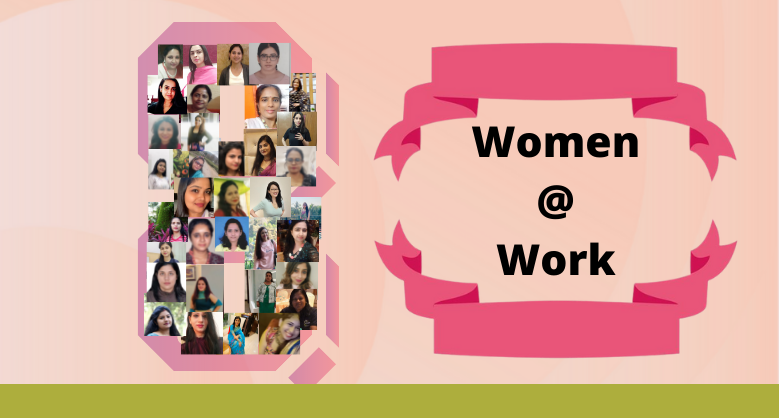
Women@work
According to several polls conducted internationally, a substantial number of working women in India have been severely impacted in some way as a result of the work-life balance had worsened due to extended work hours and a work-from-home setup during the COVID-19 pandemic.
“My child became accustomed to taking online classes and sending his homework after 6–7 months, which allowed us to leave him alone in his studies. For a few months, household tasks were also a burden because maids were not coming. To complete all of the chores, I had to get up really early. I used to get some assistance from my husband, but after the maids rejoined work, it became more beneficial.”
“It was really hard to initially manage both work and home, but later on, it became smooth. It was a struggle to manage house chores (without a maid), the child, her studies, and the office all at the same time.”
We floated a survey questionnaire to all DSS women colleagues in order to better understand their work-life balance and the influence of COVID-19 on their personal and professional lives.
Because people have been working from home for a long time, there may be a significant communication gap between coworkers, but unexpectedly, 50 percent and 30 percent of respondents indicated that there is little or no gap between them. There could be a variety of causes for this, the most important of which could be technology – virtual meetings using applications like Zoom, Google Meet, and others.
“During the pandemic, my family and my colleagues both became the strongest bonds. For that, I really want to thank God from the bottom of my heart.”

In addition, in line with the preceding criterion, approximately 73 percent of our female employees claim they have had little or no difficulty managing work-from-home, but when some of them or a family member is afflicted with COVID, it becomes fairly difficult for them to manage things.
“I was unable to rest when I was infected, first by Delta and then by Omicron. Despite the fact that I was really ill, I had to manage both my home and office. That is when balancing felt really difficult.”
“My mother passed away during the first wave of the pandemic. During the second wave, many of our close relatives, including my husband’s brother-in-law, passed away.”

Working from home has become increasingly popular among women employees. While it is unrealistic to expect traditional workplaces to vanish entirely, the hybrid office concept is likely to become the new norm.
“It is tough for me to come on a daily basis because I am responsible for my son alone.”
“Because things are proceeding this way (partial office and partly WFH), it is ideal for me, as I occasionally have troubles with the child’s caretaker.”
Respondents with caregiving responsibilities reported that only 30-40% of childcare or care for other family members was their responsibility, prior to the pandemic. However, that percentage has risen to about 90% post. Those with caregiving responsibilities also stated that they had taken on additional tasks such as virtual schooling and caring for other dependents, which had harmed their personal balance!
Along with having to adapt their daily lives in significantly different ways, many women are also concerned about the impact the pandemic could have on their career progression, both in the short and long term. COVID-19 has had a negative impact on nearly half of the respondents’ career advancement opportunities, according to nearly half of the respondents.
On a positive note, a majority of respondents said they are motivated by keeping a positive mindset and having good discussions with their loved ones to keep them going during pandemic time as well as beyond that.
“There were times when I was really lost, really needed someone’s shoulder to cry on, but talking to parents, playing with children, trying my hands at stitching and cooking (new dishes which I had never tried earlier) and, above all, ignoring negative comments were the things that got me through the difficult times.”
Finally, we would like to say, as one of our colleagues said,
“Every woman is special, so please do take care of yourself along with your responsibilities. Spread happiness as much as possible. If you are fine, then your family will also be fine.”
Latest Articles
International Women’s Day – Prioritising Women’s Health for a Healthier...
BY Ms. Sohini Chatterjee, Application Specialist, DSS Imagetech 7th March 2026
In 2013, one public disclosure transformed the global conversation around women’s health. When Angelina Jolie revealed in a New York Times op-ed that she carried a BRCA1 mutation and had...
Read More
How BX51WI Microscopes Support High-Resolution Neural Imaging
BY DSS Imagetech Pvt Ltd 24th February 2026
Picture this scenario. It’s 6:00 PM on a Friday. You have spent the last six hours harvesting tissue. You perfused the mouse perfectly, the liver cleared instantly, and the brain...
Read More
The Role of Research & Development in Driving Scientific Innovation
BY DSS Imagetech Pvt Ltd 24th February 2026
Human progress is not an accident. The leap from a simple medicinal herb to a targeted biologic drug, from a magnifying glass to a digital microscope, or from a basic...
Read More