DSS: Redefining Biotechnology & Life Science in India































CLONALITY
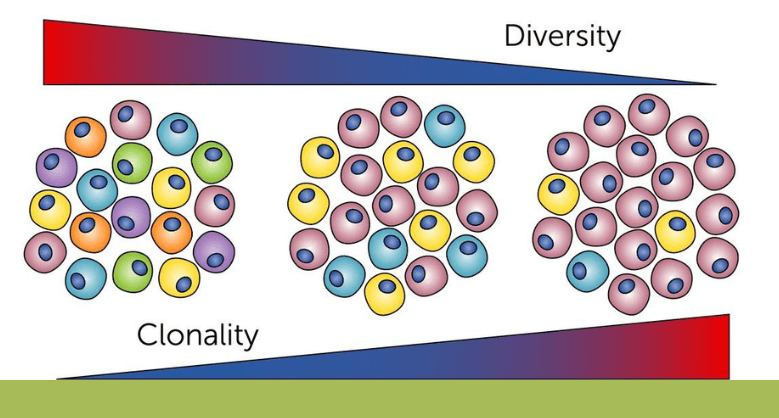
Clonality explains the function of immune cell response(lymphocytes) specific to a particular antigen. It is a widespread approach for studying antibody formation toward immune response. Leukemia & lymphomas originate from lymphoid cells due to malignant transformation and are cell-specific or ‘clonal’ antigen receptor gene rearrangements. There are different types of clonality like monoclonal (from one clone), oligoclonal (from a few clones) and polyclonal (derived from many clones). These are used for testing antibiotics or in immunology.
What is Clonality Testing?
Clonal testing is the detection of antibiotics or immunoglobulin and T-cell receptor gene rearrangements with the help of different approaches like PCR assays, Southern blotting analyses, next-generation sequencing analysis etc. In-vitro assays also detect clonal rearrangement which ultimately helps to treat malignancies.
Various applications of clonality testing are-
- identification of clonal B-cell and T-cell malignancies.
- identification of gene rearrangements in hematologic samples.
- Identifying clonal rearrangements of the immunoglobulin heavy chain (IGH) gene in patients with chronic lymphocytic leukaemia (CLL) and small lymphocytic lymphoma (SLL).
So, there are various other applications of clonality testing which help to detect them. And its requirement is going to increase in near future.
Latest Articles

World Cancer Day (4 February): Together, We Can Beat Cancer
BY DSS Imagetech Pvt Ltd February 4, 2026
Standing Together Against Cancer Cancer continues to affect millions of lives worldwide, touching not only patients but also families, caregivers, and entire communities. Despite the continued immense burden of cancer,...
Read More
The Unsung Hero of the Bench: Why the Evident CX23...
BY DSS Imagetech Pvt Ltd January 19, 2026
You know that feeling when you walk into a laboratory first thing in the morning? The hum of the refrigerator, the smell of ethanol and agar, the quiet potential of...
Read More
How to Choose the Right Microscope for Your Biotech Laboratory:...
BY DSS Imagetech Pvt Ltd January 19, 2026
Let’s be honest for a second: walking into a lab that’s just been outfitted with brand-new equipment is one of the best feelings in the world. The clean benchtops, the...
Read More