DSS: Redefining Biotechnology & Life Science in India




























Parkinson’s Disease
slow, stop and reverse Parkinson!!
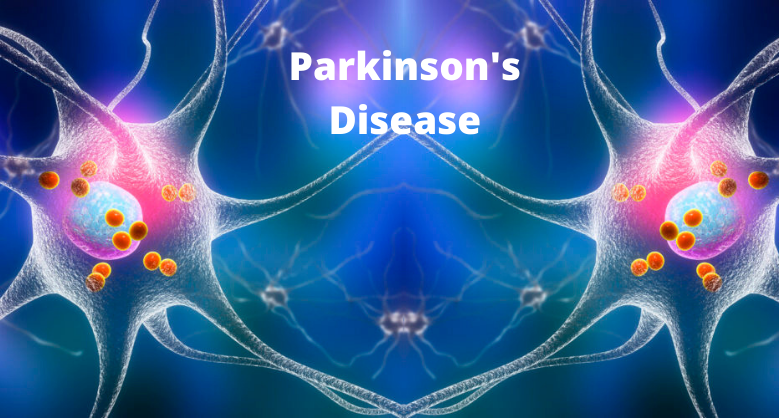
Parkinson’s disease (PD) is a frequently diagnosed disease amongst elderly people having neurodegenerative disorders. PD is a disorder of the central nervous system which includes motor structures of the basal ganglia and is characterized by the loss of dopaminergic function i.e neurotransmitters of the brain (This loss is associated with one of the most prominent human neurological disorders in PD) and consequently diminishes motor function. Typically, patients affected by PD experience motor dysfunction only after 50% to 80% of dopaminergic neurons have been lost, suggesting the involvement of a compensatory mechanism in the early stages of the disease.There has also been a greater realization that Parkinson’s disorder may be associated with significant non-motor disturbances in addition to the more commonly recognized motor complications. Non-motor complications related to Parkinson’s disease usually are more troublesome as this disease progresses in a person’s life.
Several motor and non-motor features can occur before the diagnosis, from the time the disease sets in. Doctors treating the patient primarily try to assess the association between first related prediagnostic features observed in primary care and a subsequent diagnosis of Parkinson’s disease. Then chart up the timeline of these first presentations before diagnosis.
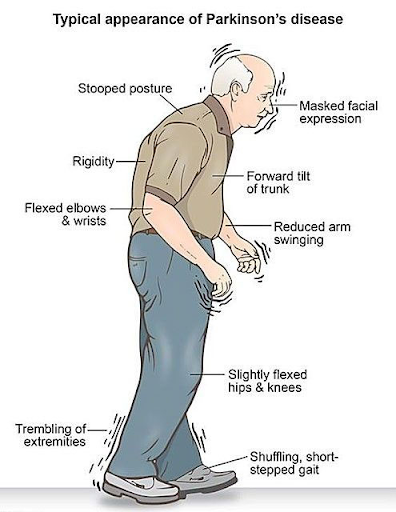
There are a number of other related factors or Parkinson’s associated signs that are highlighted. For example change of handwriting as the disease progresses with micrographia is often an early feature as also the reduced facial expression. Another early symptom observed for diagnostic purposes of Parkinson’s is loss of arm swing on one side. A Myerson’s sign or glabellar tap sign is a clinical physical examination performed on PD patients in which a patient is unable to resist blinking when tapped repetitively on the glabella, the area above the nose and between the eyebrows which helps to diagnose an early symptom of Parkinson’s disease. A reduced sense of smell is another earlier parameter of measurements of PD. As the disease progresses hypophonia, drooling of saliva (as well as reduced swallowing) and impairment of postural reflexes i.e. unstable while standing is one of the primary motor symptoms of Parkinson’s disease (PD) that emerges in the later stage of the disease.
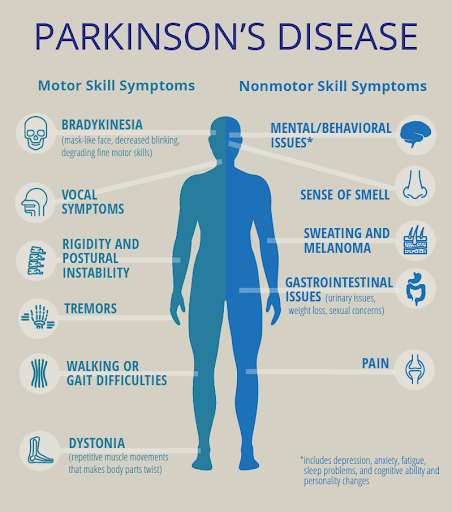
Diagnosis of a Parkinsonian syndrome
Step 1: Bradykinesia (voluntary movement becomes slow with a progressive reduction in
speed and amplitude of repetitive actions) that happens due to one of the
following:
- Muscular rigidity
- 4–6 Hz rest tremor and
- Postural instability which is not caused by primary visual, vestibular, cerebellar or proprioceptive dysfunction
Step 2: Exclusion criteria for Parkinson’s disease (PD)
a) History of repeated strokes with the stepwise progression of parkinsonian features
- History of repeated head injury
- History of definite encephalitis
- Oculogyric crises
- Neuroleptic treatment at the onset of symptoms
- More than one affected relative (family history)
- Sustained remission
- Strictly unilateral features after 3 years
- An inability to look in a vertical direction as a result of cerebral impairment.
- Cerebellar signs
- Early severe autonomic involvement
- Early severe dementia with disturbances of memory, language and inability to perform voluntary skilled movements
- Babinski’s sign
- Presence of cerebral tumour or communicating hydrocephalus on CT scan
- Negative response to large doses of Carbidopa/levodopa. It’s a dopamine precursor used in the management of Parkinson’s disease.
Step 3: Supportive criteria for PD (three or more required for the diagnosis of definite PD)
- Unilateral onset
- Rest tremor present
- Progressive disorder
- PD is typically an asymmetrical disease where the motor symptoms affect one side of the body at the onset.
- Excellent response (70–100%) to levodopa
- Severe levodopa-induced chorea
- Levodopa is the most effective treatment response inpatient is observed for 5 years or more
- For a patient to respond to Clinical treatment it takes at least 10 years or more
Role of Surgery :
The use of surgery in PD dates back over 50 years and during the early 1950s, patients particularly those with severe tremors would on occasion be referred for an ablative surgery (to destroy the affected body part or tissue) usually to the contralateral thalamus. The introduction of levodopa (used to treat the symptoms of Parkinson’s disease and Parkinson’s-like symptoms) which gave away the surgical way of treating the affected patients. Due to long recovery time as well as less positive results in the case of clinical treatment with levodopa, this prompted surgeons and clinicians for surgical treatment. Initially, this concentrated on lesion surgery usually in the form of pallidotomy which has shown to be successful, particularly for levodopa-induced dyskinesias. Further development came up with the introduction of stimulators which involved high-frequency deep brain stimulation (DBS). Deep brain stimulation (DBS) is a neurosurgical procedure that uses implanted electrodes and electrical stimulation to treat movement disorders found in patients with Parkinson’s disease (PD) combined with essential tremor, dystonia and other neurological conditions. The simulator targets a number of areas in the basal ganglia. This procedure is carried out to reduce bradykinesia, tremor & rigidity. This also reduces drug-related motor complications is bilateral subthalamic stimulation by which patients can get very dramatic benefits.
Focused Ultrasound Therapy :
Focused ultrasound is an early-stage, noninvasive, therapeutic technology with the potential to boost up physical confidence of the person suffering from PD along with decreasing the cost of aftercare for patients with Parkinson’s disease having performed any surgery. It’s a non-surgical procedure that induces an ablation in a zone that helps with symptoms in tremors and Parkinson’s patients. This novel technology focuses beams of ultrasonic energy precisely and accurately on targets deep within the brain without damaging surrounding normal tissues.
How it Works :
Where the beams converge, focused ultrasound produces a number of therapeutic effects aiding Parkinson’s disease to be treated without surgery. For movement disorders, the mechanism is ablation (i.e. thermal disruption or surgical removal of body tissue) that can be targeted for several other treatments. For the preclinical treatment of the underlying cause, the mechanisms can temporarily interrupt the blood-brain barrier, thereby allowing the desired therapeutics the ability to enter the brain. Opening the Blood-Brain Barrier can also enable undesired materials to freely depart from the brain.
Advantages
- Focused ultrasound is non-invasive which means treatment without any incisions or holes in the skull and also no electrodes in the brain reducing the risk of infection and blood clots.
- Precise targeting minimizes damage in comparison to non-targeted healthy brains.
- Compared to deep brain stimulation, focused ultrasound could be a single procedure, and doesn’t require subsequent procedures/visits to change or recharge batteries, repair broken wires or adjust simulator settings.
- It also doesn’t involve any collateral damage to healthy tissue or the danger of infections during this procedure while implanting a foreign body.
Since PD is closely connected to the lack of dopamine cells in our body, researchers have been looking for ways to increase dopamine naturally through a proper diet. Secondly, symptoms related to PD such as dementia and confusion might also be controlled /diminished through lifestyle changes like diet and exercise. Foods high in antioxidants are suggested to cut down on oxidative stress in the brain. Factually, no treatment exists till now that could fully stop symptoms of Parkinson’s from occurring. Since there’s no cure for Parkinson’s, and the drugs prescribed to manage symptoms sometimes have harsh side effects, more and more people are exploring alternative remedies for treatment.
Diet control benefits:-
Necessary intake of lots of antioxidants is necessary which can be replenished through intake of the below items:-
- Different kinds of tree nuts, like walnuts, Brazil nuts, pecans, and pistachios
- Blueberries, blackberries, goji berries, cranberries, and elderberries
- Tomatoes, peppers, eggplant, and other nightshade vegetables
- Spinach and kale
- If a patient shows symptoms like dementia and confusion consuming more salmon, halibut, oysters, soybeans, flaxseed and kidney beans is suggested.
- Consuming caffeine might also help slow down the progression of Parkinson’s.
- Muscle cramps are associated with Parkinson’s patients hence drinking tonic water having quinine (in small doses) increases magnesium through diet.
Latest Articles
Think Fungal: The Infection We Often Miss
BY Megha Dhumal, Product Specialist 18th September 2026
Fungal Disease Awareness Week | 14–18 September 2026 2026 marks the 10th Annual Fungal Disease Awareness Week, highlighting a decade of efforts to raise awareness of fungal diseases and their...
Read More
Super-Resolution Microscopy: Upgrading to Abberior STEDYCON for Advanced Research
BY Dr. Anirban Bose (Ph.D.) Product & Application, Manager 5th September 2026
No matter how high-end your conventional fluorescence or confocal microscope is, there is a hard ceiling that eventually becomes incredibly frustrating. You could be trying to get a clear look...
Read More
How to Choose the Right Research Microscope
BY DSS Imagetech Pvt Ltd 14th August 2026
You’re standing there with a procurement form and a budget number. Someone circled in red, and down the hall a colleague is muttering that their old scope “still works fine,...
Read More