DSS: Redefining Biotechnology & Life Science in India
























71 potential life years lost on average when a child dies of cancer
Children are the world’s most valuable resource and its best hope for the future. So said John F Kennedy. However, some children face a strong battle in the form of cancer. Childhood cancer is a term used to describe cancer in children before the age of 18 years. Although childhood cancers are rare (0.5%-4.6% of all cancers), every year 300,000 children are diagnosed with cancer annually. Moreover, a lack of childhood cancer registries in many countries can lead to unaccounted cases.
The most common types of childhood cancer are ALL (acute lymphocytic leukemia) and AML (acute myelogenous leukemia). These leukemias can cause bone and joint pain, fatigue, weakness, pale skin, bleeding, bruising, fever, weight loss, etc. Other common childhood cancers are brain and CNS (central nervous system) tumors and lymphomas. Adult cancers like breast, lung, etc rarely, if ever, occur in children.
Although enough data may not be available from these resource limited settings, available reports suggest that childhood cancer may be caused due to genetics. The silver lining is that about 90% childhood cancer are curable. However, 90% childhood cancer deaths also occur in resource limited settings (low to medium income countries).
Absence of obvious symptoms in childhood cancer can lead to late detection. However, close observation, adequate diagnostic procedures and access to quality health services; gives a high probability of detecting cancer early, even in childhood cases. It is a universal responsibility to improve access to adequate healthcare by raising awareness and resources available.
DSS has a number of solutions for the detection of cancer including techniques like cytogenetics, molecular and sequencing.
Cytogenetics:
Cytogenetics may help diagnose the root cause of childhood cancer. With the help of a cytogenetic workstation & software from Olympus & ASI (Applied Spectral Imaging) and using FISH technology from Abbott Molecular (Vysis), haematological cancer detection can be fast and accurate. In the case of paediatric ALL, PML-RARA available from Abbott Vysis can help in early diagnosis and better clinical management for the patient. (Testing to result is within 6 hours using Vysis PML-RARA FISH probe.) In addition, cytogenetic media from Euroclone can help to rule out genetic abnormalities in the second line.
Molecular:
Molecular testing can benefit a patient in remission by MRD (Minimal residual disease) testing. MRD is the small number of leukaemia cells that remain in the patient’s body even after treatment when the patient is in remission. This is the main cause of cancer relapse. Real-Time PCR kits for BCR-ABL from Entrogen can successfully aid in MRD testing.
Molecular & Sequencing:
Using DNA sequencing, MLPA (Multiplex Ligation-dependent Probe Amplification) probes can help to detect the total range of genetic abnormalities in a single test. MLPA is a proprietary technology from MRC-Holland which can, among other aberrations, also detect haematological cancers in children.
With its extensive portfolio, DSS aims to be a one stop solution for cancer detection in children.
After all, if our Children are our future, then why are we not fighting harder to find cures for them? And the first step to find cure is to first find the problem.
There are 71 potential life years lost on average when a child dies of cancer compared to 17 potential life years lost for adults. These potential life years can be saved if diagnosis and treatment is timely and care and support is improved.
Latest Articles
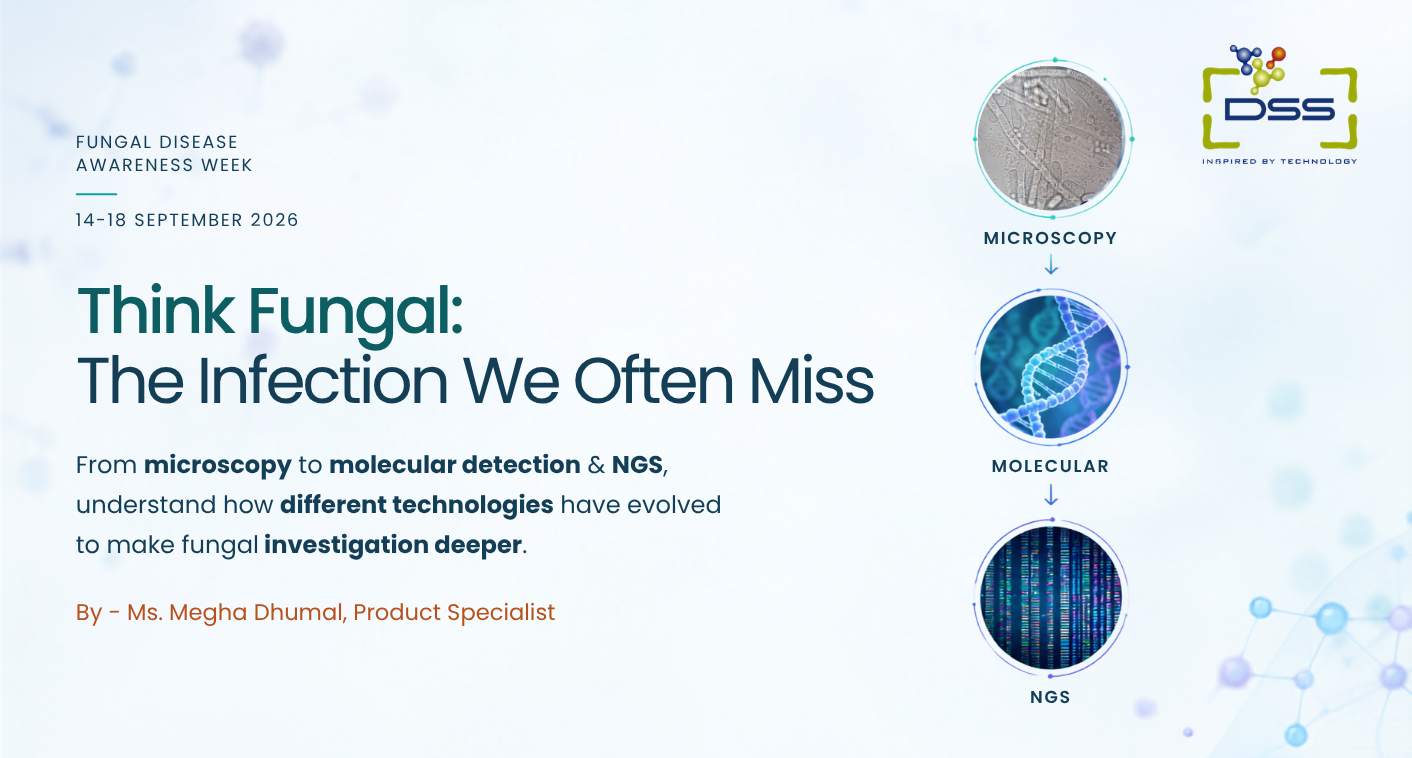
Think Fungal: The Infection We Often Miss
BY Megha Dhumal, Product Specialist 18th September 2026
Fungal Disease Awareness Week | 14–18 September 2026 2026 marks the 10th Annual Fungal Disease Awareness Week, highlighting a decade of efforts to raise awareness of fungal diseases and their...
Read More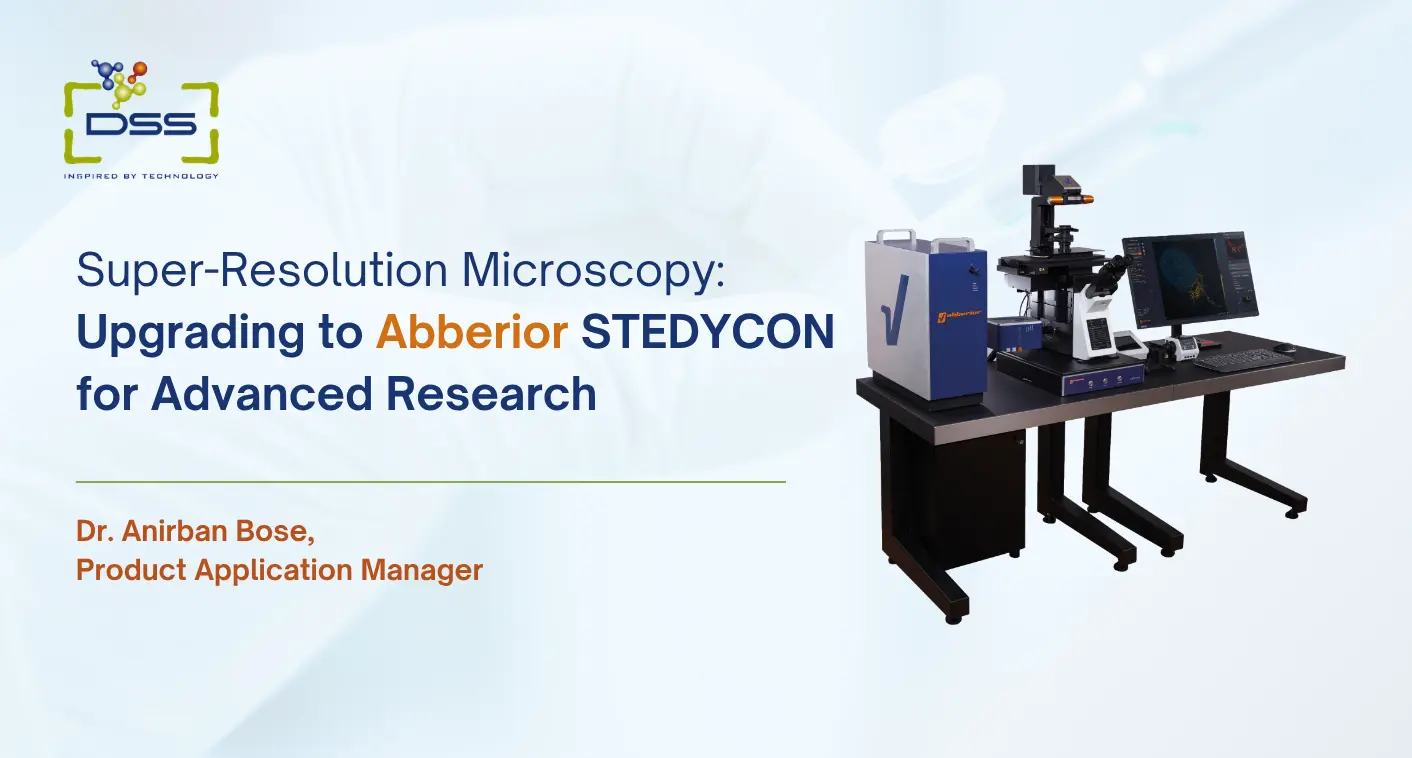
Super-Resolution Microscopy: Upgrading to Abberior STEDYCON for Advanced Research
BY Dr. Anirban Bose (Ph.D.) Product & Application, Manager 5th September 2026
No matter how high-end your conventional fluorescence or confocal microscope is, there is a hard ceiling that eventually becomes incredibly frustrating. You could be trying to get a clear look...
Read More
How to Choose the Right Research Microscope
BY DSS Imagetech Pvt Ltd 14th August 2026
You’re standing there with a procurement form and a budget number. Someone circled in red, and down the hall a colleague is muttering that their old scope “still works fine,...
Read More