DSS: Redefining Biotechnology & Life Science in India





























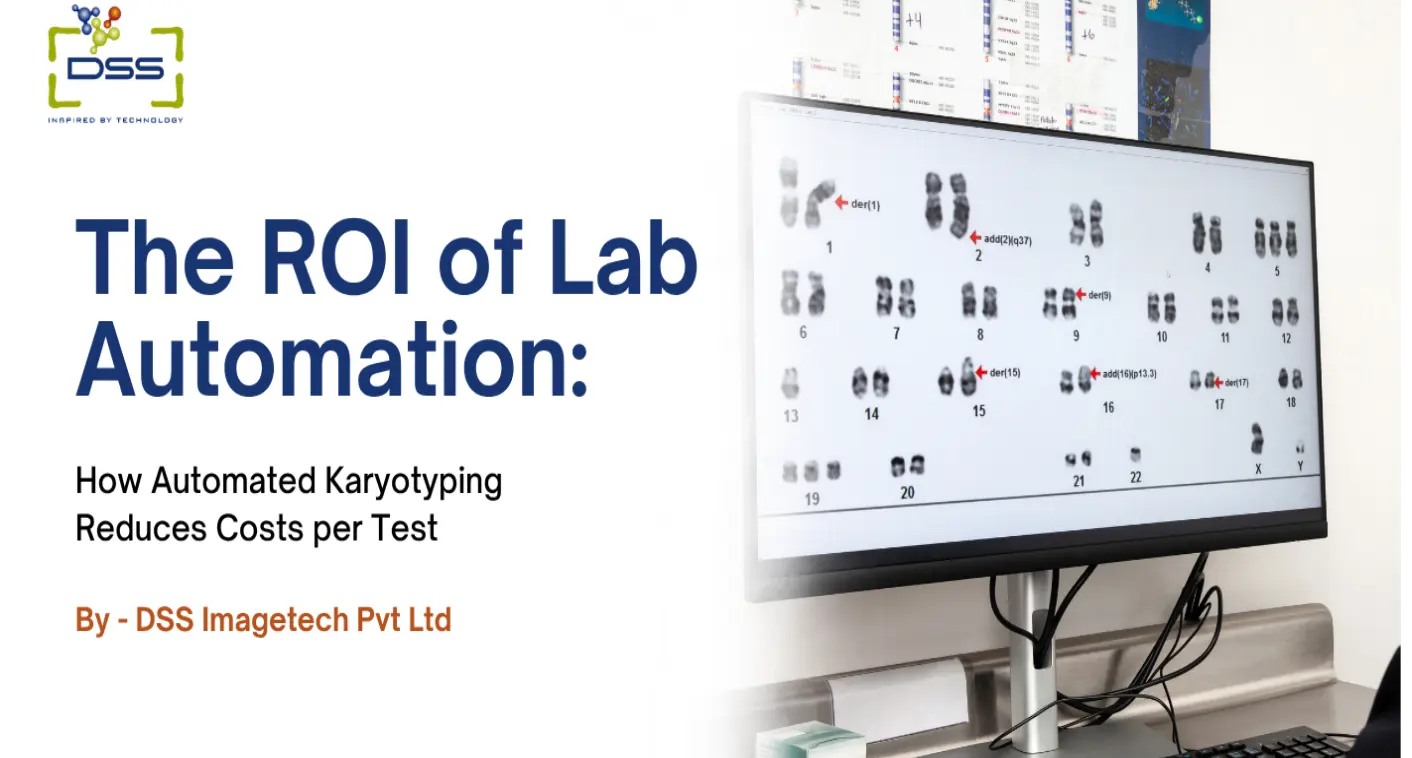
The ROI of Lab Automation: How Automated Karyotyping Reduces Costs per Test
If you walk into almost any cytogenetics lab across India right now, you’ll probably hear the exact same complaint. Lab directors are staring at their monthly numbers, calculating just how many exhausting hours their teams spend hunched over microscopes manually arranging chromosomes, and wondering if they’re stuck in the dark ages. And honestly, they’re right to ask, there’s a massively better way to handle this workflow now. There has been for a while.
But the follow-up question, the one that actually determines whether anything changes, is this:
Does the better way make financial sense for us?
That is what this piece is about. Not a promotional overview of automation features, not a list of what software can theoretically do, but an honest look at the return on investment that automated karyotyping delivers in real lab settings and why the numbers are increasingly compelling for Indian cytogenetics facilities of all sizes.
First, Understand What Manual Karyotyping Actually Costs
Though it sounds simple enough, figuring out the actual ROI on automation means you first have to get real about what your manual setup is costing you. Most labs completely miss the mark here because the biggest drains show up as wasted hours rather than obvious, line-item expenses on a spreadsheet.
Think about what your analysts actually go through just to finish a single manual karyotyping case. A highly trained cytogeneticist has to sit there hunched over a microscope, hunt down a decent metaphase spread, click a photo, and then manually drag and drop 46 individual chromosomes into pairs. They’re stuck checking banding quality, squinting for structural tweaks, and typing up reports by hand before they can even think about moving to the next slide.
On a perfect day with great peripheral blood samples, a fast tech might blast through a case in 30 or 40 minutes. But if you hand them a prenatal sample with messy, poorly banded spreads? You’re easily looking at an hour and a half of agonising work. And don’t even get me started on complex oncology cases; hunting for elusive marker chromosomes can kill an entire afternoon for a single patient.
Now multiply that by your monthly case volume. A lab doing 150 karyotypes a month, which is a reasonable volume for a mid-sized fertility clinic or a hospital cytogenetics unit, is spending somewhere between 60 and 100 analyst hours per month just on the analysis and reporting phase. That is before you count quality checks, repeat analysis, documentation, and reporting overhead.
At a senior cytogenetics technologist’s salary of ₹50,000 to ₹75,000 per month, you are paying for a significant portion of that salary just to have skilled hands arranging chromosomes into pairs. That is a costly use of trained expertise, and it is exactly the kind of repetitive, rule-based task that software does faster and more consistently.
What Automated Karyotyping Software Actually Does
Automated karyotyping software has evolved substantially from the early generation of tools that simply captured images and let you drag chromosomes around on screen. Modern systems, including platforms widely used in Indian labs today, do considerably more.
Instead of forcing your staff to manually hunt through every millimetre of a slide for a decent metaphase, the software takes over the image acquisition stage entirely. By hooking directly into the microscope camera, it automatically scans the slide and picks out spreads based on morphology. If a field doesn’t meet the quality threshold, the system just dumps it. This means that by the time your analyst actually sits down to work, they’re starting with a pre-filtered gallery of usable images rather than wasting half their morning squinting into the void.
At the classification stage, the software applies pattern recognition algorithms trained on large karyotype datasets to automatically pair and arrange chromosomes by number and group. Current generation tools handle the vast majority of routine karyotypes with high accuracy, producing a preliminary karyotype arrangement that the analyst reviews and corrects rather than building from scratch.
At the analysis stage, the software flags potential anomalies. Numeric abnormalities like trisomies and monosomies are flagged automatically. Size discrepancies within pairs are highlighted. Structural changes that alter the banding pattern are marked for review. The analyst still makes the clinical call, but the software has already done the pattern matching and preliminary sorting.
At the reporting stage, ISCN nomenclature generation, report templating, and patient data integration are handled by the system, reducing the administrative overhead that in manual workflows is easy to underestimate.
The net effect of all this is not that the cytogeneticist is replaced. The clinical interpretation, the decision about what an ambiguous rearrangement means, the report that goes to the clinician, and ultimately the patient—all of that still requires trained human expertise. What automation removes is the repetitive, time-consuming, low-cognitive-value work of image hunting and chromosome sorting that currently occupies a large fraction of every analyst’s working day.
The ROI Calculation: Breaking It Down
Automated karyotyping ROI has three main components: time savings, throughput capacity, and error reduction. Let’s work through each with realistic Indian market numbers.
Time Savings per Case
Laboratories that implement automated karyotyping systems consistently report that analysis time for routine cases decreases by approximately 40–60%.
A case that previously required around 35 minutes may take only 15–20 minutes, because the software performs most of the chromosome arrangement and the analyst focuses on reviewing and correcting rather than assembling the karyotype from scratch. For complex cases, the absolute time savings are generally smaller, but a software-generated preliminary arrangement still reduces manual effort and shortens overall turnaround time.
The operational impact becomes significant when these savings are multiplied across the laboratory’s workload. For example, a laboratory processing 150 cases per month and saving an average of 15 minutes per case recovers approximately 37.5 hours of analyst time each month.
Higher-volume laboratories realize proportionally greater savings, allowing staff to handle additional cases, reduce turnaround times, or redirect effort toward more complex analyses and quality assurance activities.
From a return-on-investment perspective, the value of automation depends primarily on three factors:
- The laboratory’s monthly case volume.
- The average time saved per case.
- Local personnel costs.
As case volumes increase, labor savings accumulate more rapidly, often enabling laboratories to recover their software investment within a relatively short period while continuing to benefit from improved productivity and workflow efficiency over the long term.
Throughput Capacity Increase
This is where the ROI argument becomes genuinely compelling. Recovered analyst time is not just a cost saving; it is additional capacity. A lab where each analyst was previously limited to 8 to 10 cases per day can now process 12 to 15 cases per day with the same staff. That additional capacity directly translates to additional revenue without additional headcount.
In the Indian private lab market, a routine peripheral blood karyotype is billed at ₹2,500 to ₹5,000. Prenatal karyotyping runs ₹4,000 to ₹8,000. Oncology FISH cases are higher still.
Let’s look at the math for a second. If you have a small two-analyst team, and automation lets them knock out just 4 extra cases each per day, you’re suddenly looking at 176 additional cases every month, assuming a standard 22-day work month.
If you charge an average of ₹3,500 per case, that injects an extra ₹6.16 lakh into your monthly revenue. And the best part? You didn’t have to hire a single new person or pay for extra overtime to get it.
That number alone transforms the ROI calculation from a cost reduction story to a revenue growth story, which is a very different and more powerful conversation in any lab director’s budget review.
Error Reduction and Quality Costs
Let’s face it, manual karyotyping always leaves the door open for human error. What happens if a tech misses a trisomy 21 in a tricky prenatal sample, botches a karyotype assignment, or just makes a typo on the ISCN designation in the final report?
Sure, these mistakes don’t happen often in a high-quality lab, but when they do, the fallout is massive. You’re looking at real patient harm, devastating clinical liability, and a wrecked reputation for your business. You can’t easily put a price tag on that kind of disaster on a spreadsheet, but you definitely can’t afford to ignore it.
Automated systems do not eliminate human error because the analyst still reviews every case. But they add a layer of consistency and a formal quality checkpoint that reduces the probability of certain classes of error.
The software will never miscount a chromosome pair because it is tired at the end of a long shift. It will never confuse a group C chromosome for a group B chromosome because of visual fatigue. These are not common errors in good labs, but they are human ones, and automation materially reduces their likelihood.
Cytogenetics Software in India: What the Market Looks Like
The cytogenetics software India market has matured considerably over the past five to eight years. Several international platforms now have local distribution, support, and, in some cases, Indian-specific pricing that makes them accessible beyond the top-tier academic centers.
When Indian labs evaluate these platforms, a few criteria come up consistently:
- Hardware Compatibility: Compatibility with existing camera and microscope hardware, since a software investment that also requires a hardware upgrade changes the economics significantly.
- Classification Quality: The quality of automated chromosome classification for the specific case mix the lab sees.
- Local Support: Response time for technical issues and availability of training.
- NABL Requirements: The software’s NABL audit trail and documentation capabilities.
Price ranges for cytogenetics software in India, including hardware interface, installation, and typically a first-year service contract, run from ₹8 lakh for entry-level systems to ₹25 lakh for comprehensive platforms with full automation, multiple workstations, and advanced FISH analysis modules.
Multi-year service contracts typically add 10 to 15 percent of the software cost annually.
Lab Productivity Tools Beyond Karyotyping Software
While upgrading to automated karyotyping software is easily the biggest win for a cytogenetics lab, you can’t look at it in a vacuum. It’s really just one piece of a much larger puzzle. The actual efficiency of your business depends on a whole ecosystem of productivity tools working together, not just a single fancy piece of software.
Laboratory Information Management Systems (LIMS)
Laboratory Information Management Systems (LIMS) are increasingly being adopted by Indian clinical labs, including cytogenetics units. A good LIMS handles sample registration, tracking, turnaround time monitoring, result entry, and report dispatch.
In a manual workflow, a cytogenetics lab processes samples across multiple stages over several days, and keeping track of where each sample is in the workflow is a real administrative burden. A LIMS eliminates most of that burden and substantially reduces the risk of samples being misplaced, delayed, or reported incorrectly.
The integration between karyotyping software and LIMS is a key consideration during procurement. Labs that have both systems but cannot get them to communicate still end up with manual data entry at the interface, which defeats part of the productivity benefit.
Automated Metaphase Finders
Automated metaphase finders, which are hardware and software systems that drive the microscope stage automatically to scan and capture metaphase spreads without an analyst sitting at the scope, are another significant productivity lever.
If a system can pre-scan slides overnight or while the team is out at lunch, analysts can walk up to their desks with a full gallery of metaphase images already captured and waiting for them. This removes the bottleneck at the start of every case where analysts are searching for usable spreads.
Digital Storage and Image Management
Digital storage and image management infrastructure rounds out the picture. NABL-accredited labs are required to maintain records for specific retention periods.
Managing physical slide archives is cumbersome and space-consuming. A properly configured digital archive integrated with the karyotyping software reduces storage costs, simplifies audits, and makes retrospective case review genuinely practical.
The Staffing Equation: What Automation Means for Your Team
One question that comes up whenever automation is discussed in Indian lab settings is whether it means fewer jobs. This deserves a direct answer.
In the current Indian cytogenetics context, the answer is almost certainly no, for one straightforward reason: trained cytogeneticists are already in short supply. India does not have a surplus of skilled karyotyping analysts who would be displaced by software. What it has is a shortage of trained people relative to the growing demand for cytogenetics services.
Automation does not eliminate the need for those people; it makes the people you have able to handle more work without burning out or making fatigue-related errors.
The career implications for cytogeneticists and lab technologists are actually positive. Time freed from repetitive chromosome sorting is time available for more complex and intellectually demanding work: reviewing difficult cases, developing new assays, participating in clinical case discussions, and contributing to quality improvement initiatives.
Labs that have implemented automation consistently report that analyst job satisfaction improves when the grinding, manual work is reduced.
For lab directors thinking about workforce planning, automation is also a hedge against staff turnover. If your entire throughput capacity depends on two or three highly skilled manual analysts, losing one person to a competitor or to maternity leave creates a serious operational problem.
A lab where automation handles the routine processing workload is more resilient when staffing changes occur.
The Turnaround Time Argument: Why Clinicians Care
So far, we have mostly discussed ROI in terms of internal lab economics. But there is an external dimension that matters equally in the Indian fertility and oncology market: turnaround time.
For prenatal karyotyping, turnaround time is not an abstract quality metric. A couple waiting for an amniocentesis result are experiencing one of the most stressful periods of their lives. A result that comes in 12 days instead of 18 days is not a minor operational improvement; it is a meaningful reduction in anxiety for a family in a genuinely difficult situation.
For oncology cytogenetics, turnaround time directly affects treatment decisions. A hematologist waiting for a bone marrow karyotype result before initiating a treatment protocol needs that result as quickly as clinically safe.
Labs that can consistently deliver faster results build stronger referral relationships with clinical teams.
Automated karyotyping reduces turnaround time through two mechanisms. The automated metaphase capture step eliminates the delay between staining and analysis, since slides can be scanned immediately after processing rather than queuing for analyst time.
The faster per-case analysis time also means the bottleneck at the analysis workstation is reduced, allowing the lab to process the day’s cases more completely before the reporting cutoff.
Labs that have implemented automation in India have reported reducing average turnaround time for routine karyotypes by two to four days.
Common Objections and Honest Responses
Any serious evaluation of lab automation needs to address the objections that come up in real purchasing discussions, not just present the benefits.
“Our volume is too low to justify the investment.”
This is the most common objection from smaller labs, and it deserves a nuanced answer. At very low volumes, say fewer than 50 cases a month, the ROI timeline on full automation software is genuinely long, possibly five years or more.
But the calculation changes if you consider that automation may enable you to grow volume by reducing your per-case cost and turnaround time, making you more competitive for referrals. Automation is as much a growth enabler as a cost reducer.
“Our team is skilled enough that automation won’t improve quality.”
This may be true for error rates, but it misses the point about consistency and scalability. A skilled team that processes 120 cases a month is a different proposition than a skilled team that processes 120 cases a month with consistent turnaround times, full digital audit trails, and NABL-ready documentation, all of which automation supports regardless of analyst skill level.
“The software doesn’t work well enough for our case mix.”
This was a more valid concern five years ago. Current-generation platforms have improved substantially in classification accuracy and in handling unusual cases.
The honest answer is to request a demonstration with your actual case files before purchasing, which any reputable vendor should accommodate.
“We can’t afford the downtime during implementation.”
Implementation of karyotyping software in a running lab typically takes two to four weeks to become fully operational, with training and parallel running.
Planning this during a lower-volume period, if your lab has seasonal patterns, reduces the impact. The disruption is real but time-limited.
Making the Business Case Internally
For lab directors who need to bring an automation investment proposal to a hospital administration, a clinic owner, or a board, the business case needs to be presented in language that non-scientists understand.
The most effective framing combines three elements:
- Direct Cost Reduction: Reduced labor hours per test, expressed as a reduction in cost per test over current levels.
- Revenue Upside: Increased throughput capacity expressed as additional cases per month at current billing rates.
- Strategic Benefits: Faster turnaround times and improved NABL compliance posture, supporting referral volume growth and accreditation outcomes.
Present a realistic payback period based on your actual volumes. For a lab doing 200 or more cases a month, a payback period of 18 to 30 months is achievable.
For smaller labs, be honest that the payback is longer, but that the strategic and quality benefits are real, even where the pure financial return takes more time.
Final Thought
The ROI of automated karyotyping in Indian labs is not a theoretical argument anymore. There are enough installed systems, enough real-world data, and enough honest conversations happening between lab directors about their before-and-after experience to make the case with confidence.
What the numbers consistently show is that at meaningful case volumes, automation pays for itself in recovered analyst time and increased throughput within a reasonable period, while simultaneously improving turnaround time, documentation quality, and the working lives of the skilled people doing the analysis.
The labs that are growing their cytogenetics volumes in India right now, the ones expanding into new test categories and building stronger referral relationships with clinicians, are largely the ones that made the automation investment two or three years ago.
The ones still debating it are processing the same volume they were then, one chromosome pair at a time.
FAQ’s :-
1. What is automated karyotyping, and how does it work?
Automated karyotyping uses advanced image analysis software to automatically scan metaphase cells, identify chromosomes, arrange them into homologous pairs, and flag potential abnormalities. Cytogeneticists then review and validate the software-generated results before issuing the final clinical report, improving both efficiency and accuracy.
2. How much time can automated karyotyping save in a cytogenetics laboratory?
Automated karyotyping can reduce chromosome analysis time by 40–60% for routine cases. By automating metaphase detection, chromosome classification, and report preparation, laboratories can process more samples per day while reducing manual workload and turnaround time.
3. Does automated karyotyping reduce the cost per test?
Yes. Automated karyotyping lowers the cost per test by minimizing manual labor, increasing laboratory throughput, reducing repeat analysis, and streamlining reporting. These operational improvements help laboratories maximize productivity without proportionally increasing staffing costs.
4. Is automated karyotyping accurate enough for clinical diagnosis?
Yes. Modern automated karyotyping software delivers high accuracy in chromosome classification and assists in identifying numerical and structural chromosomal abnormalities. However, every case should be reviewed and approved by a qualified cytogeneticist to ensure accurate diagnosis and compliance with clinical standards.
5. Is automated karyotyping suitable for small and medium-sized cytogenetics laboratories?
Yes. Although high-volume laboratories often achieve a faster return on investment, small and medium-sized laboratories also benefit from improved workflow efficiency, standardized reporting, reduced turnaround times, and greater capacity to handle future growth.
6. What should laboratories consider before investing in automated karyotyping software?
Before investing, laboratories should evaluate compatibility with existing microscopes and imaging systems, chromosome classification accuracy, LIMS integration, regulatory and NABL compliance features, local technical support, user training, scalability, and long-term maintenance costs. Selecting the right solution ensures sustainable productivity and better clinical outcomes.
Latest Articles
Think Fungal: The Infection We Often Miss
BY Megha Dhumal, Product Specialist 18th September 2026
Fungal Disease Awareness Week | 14–18 September 2026 2026 marks the 10th Annual Fungal Disease Awareness Week, highlighting a decade of efforts to raise awareness of fungal diseases and their...
Read More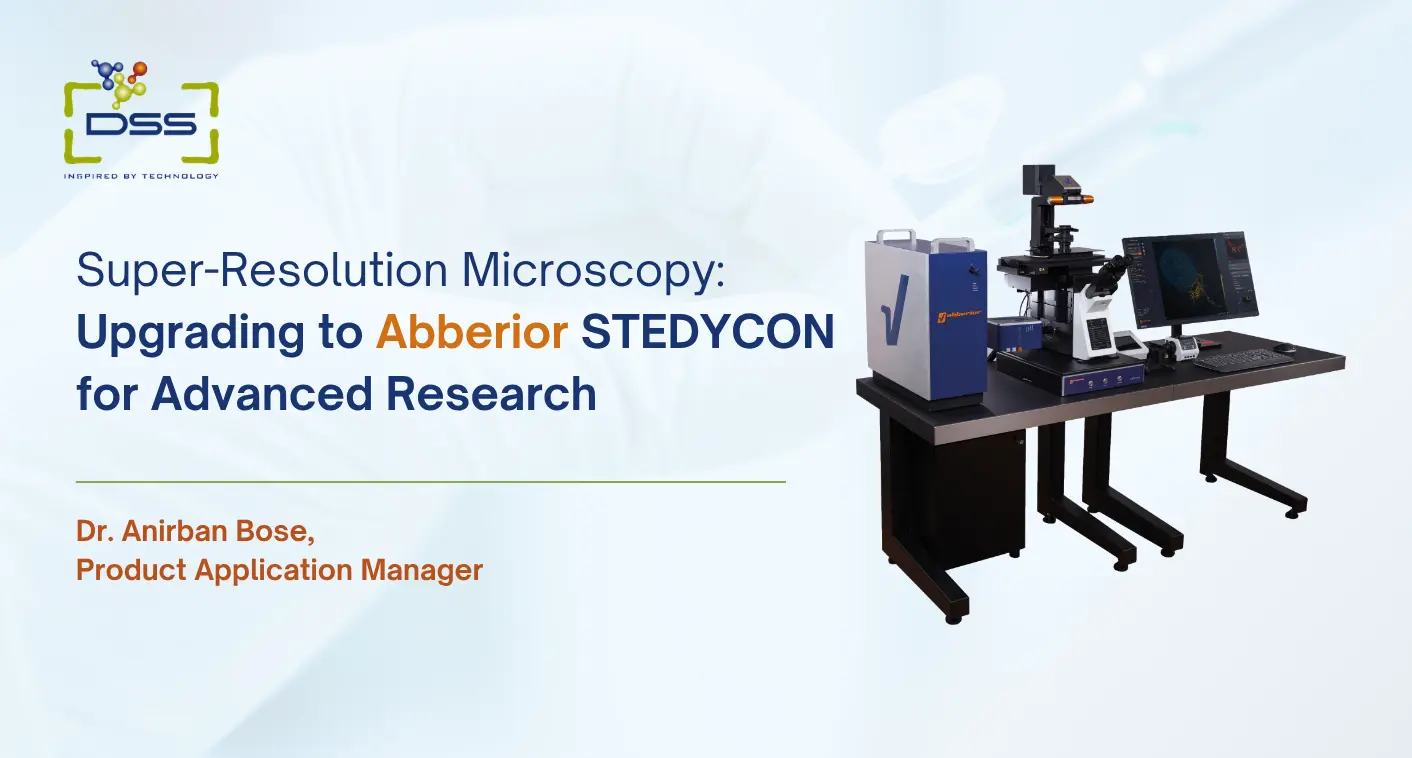
Super-Resolution Microscopy: Upgrading to Abberior STEDYCON for Advanced Research
BY Dr. Anirban Bose (Ph.D.) Product & Application, Manager 5th September 2026
No matter how high-end your conventional fluorescence or confocal microscope is, there is a hard ceiling that eventually becomes incredibly frustrating. You could be trying to get a clear look...
Read More
How to Choose the Right Research Microscope
BY DSS Imagetech Pvt Ltd 14th August 2026
You’re standing there with a procurement form and a budget number. Someone circled in red, and down the hall a colleague is muttering that their old scope “still works fine,...
Read More