DSS: Redefining Biotechnology & Life Science in India






























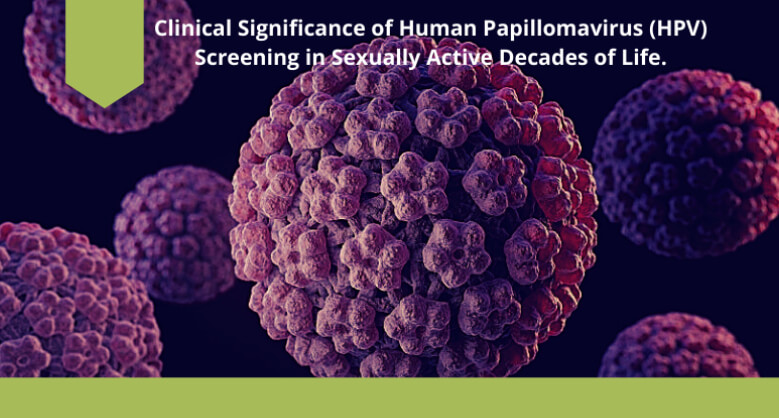
Clinical Significance of Human Papillomavirus (HPV) Screening in Sexually Active Decades of Life.
What is the human Papilloma Virus (HPV)?
HPV can spread through oral, vaginal and anal sex and comprises more than 200 related viruses. HPV types that are sexually transmitted can be categorized into two groups, low risk and high-risk group. Low-risk HPVs mostly cause no disease and are cleared by the immune system. A few low-risk HPV types can, however, cause warts on or around the genitals, anus, mouth, or throat. Persistent infection from High-risk HPVs can cause several types of cancer and the most common is cancer cervix. 14 high-risk HPV types like HPV 16, 18, 31, 51, 52, 56, 58, 59, 66, 33, 35, 39, 45, and 68 are clinically significant and mainly responsible for causing cancer. Globally, most HPV-related cancers are caused by two of these types: HR-HPV16 and HR-HPV18. The Human papilloma virus’s infection comes under the commonest sexually transmitted infection (Oh JK et. al., 2011) and very common in sexually active decades of life (Kashyap V et. al., 2011).
HPV and Cancer: What cancers are caused by HPV infection?
Cervical cancer is the most important clinical consequence related to HPV infection which is also one of the leading causes of cancer-related deaths in women (Gizzo S. et al., 2013). According to the National Cancer Institute, USA, almost all cervical cancer is caused by HPV.
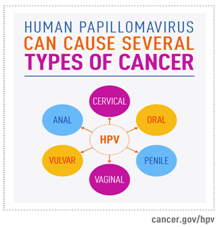
Cervical cancer is largely preventable. This is because it has a prominent pre-malignant phase cancer which can be detected by regular screening tests. The screening drastically prevents or reduces the incidence and mortality of cancer. Most women in India are ignorant about such screening. HPV can also be responsible for gynaecological cancer like the vulva and vagina. In male penile cancer, anal cancer, and oropharynx cancer is very common.
Cervical cancer is largely preventable. This is because it has a prominent pre-malignant phase cancer which can be detected by regular screening tests. The screening drastically prevents or reduces the incidence and mortality of cancer. Most women in India are ignorant about such screening. HPV can also be responsible for gynaecological cancer like the vulva and vagina. In male penile cancer, anal cancer, and oropharynx cancer is very common.
HPV and Fertility: Is there a connection between HPV and fertility?
As per scientific evidence, more than 75% of sexually active men and women have an HPV infection in their lives (Tommasino M et. al., 2013). In developing countries like India HPV infection in male has rarely been a concern. HPV infections in the male, in general, are mostly benign (Rintala MA et. Al., 2004) but in rare cases found to be associated with anal and penile cancer (Munoz N et. al., 2003). Many studies have indicated that HPV can be one of the possible causes of alteration in spermatic parameters causing sperm motility reduction, spermatozoa DNA fragmentation and seminal pH alteration (Foresta C et. al. 2010).

HPV infection has a significant implication in terms of estimating male infertility or utilizing reproduction technology (Vilma J, et al. 2019). The sperm-wash procedure successfully removed human papillomavirus (HPV) from the motile sperm fraction used for assisted reproduction techniques. HPV screening should be routinely performed on sperm samples and, upon HPV positivity, sperm-washing should be performed before assisted reproduction techniques (Claudio F et. al., 2020).
As per scientific evidence, HPV may infect semen (Rintala MA et. Al., 2004); the presence of HPV in semen samples is associated with reduced sperm motility, viral particles have been visualized concomitantly with sperm DNA (Chan PJ et. al., 1994), suggesting its role in male infertility (Foresta C et. al., 2010).
Conclusion: High-risk HPV is significantly prevalent in infertile men than infertile men. HPV DNA infection in semen seemed to be a probable risk factor for male infertility in the infertile couple. It decreases sperm progressive motility and the normal morphology rate, leading to decreased male fertility or even infertility. HPV screening is strongly recommended in sexually active decades of life as it is one of the most common viral sexually transmitted diseases in the world. Hence, vaccination of males might in its turn, have secondary benefits. and also a possible causal factor for infertility.
Introducing Fertizo a High-Risk HPV Screening Kit for HPV infection in Semen
Fertizo is an in-vitro real-time PCR based HPV screening kit developed by DSS Imagetech Pvt. Ltd. that is used for HPV DNA detection in the semen sample. It is a highly sensitive and specific kit used for High-Risk HPV screening in sexually active men and boys. Fertizo kit consists of three major components like a collection kit, DNA extraction kit and HPV detection kit.
Collection and Storage of Semen Samples: All semen samples of subjects will be collected by masturbation after 5–7 days of abstinence in sterile specimen collection vials. After liquefaction at room temperature, semen samples were stored as per World Health Organization guidelines for semen analysis (version 2010).
Extraction of HPV DNA: Semen samples were washed 3 times with sterile phosphate-buffered saline (1X PBS) and pellets were used for further analysis. DNA extraction from the purified sperm pellet was performed by Universal DNA extraction kit (DSS Imagetech Pvt. Ltd., New Delhi) as per the kit insert instruction manual.
Detection of HPV DNA: The presence of High-Risk HPV DNA in semen samples were investigated by Real-Time Polymerase Chain Reaction (RT-PCR) using Fertizo HPV Detection kit (DSS Imagetech Pvt. Ltd., New Delhi) as per kit insert instruction manual.
References:
- Kashyap V, Hedau S, Bhambhani S. 2011. “Defining the validity of classical and non-classical cellular changes indicative of low-grade squamous intraepithelial lesion encompassing human papillomavirus infection in relation to human papillomavirus deoxyribonucleic acid testing.” J Cytol. 28(4):159-64.
- Oh JK, Franceschi S, Kim BK, Kim JY, Ju YH, Hong EK, et al. 2009. “Prevalence of Human Papillomavirus and Chlamydia trachomatis infection among women attending cervical cancer screening in the Republic of Korea.” Eur J Cancer Prev;18: 56–61.
- Gizzo S, Ancona E, Patrelli T. S., 2013. “Fertility preservation in young women with cervical cancer: an oncologic dilemma or a new conception of fertility-sparing surgery?” Cancer Investigation, vol. 31, no. 3, p. 189.
- Tommasino M., 2013. “The human papillomavirus family and its role in carcinogenesis.” Semin Cancer Biol.
- Rintala MA, Grenman SE, Pollanen PP. 2004. “Detection of high-risk HPV DNA in semen and its association with the quality of semen.” Int J STD AIDS; 15: 740–3.
- Munoz N, Bosch FX, de Sanjose S, Herrero R, Castellsague X, et al. 2003. “Epidemiologic classification of human papillomavirus types associated with cervical cancer.” N Engl J Med 348: 518–527.
- Foresta C, Pizzol D, Moretti A, Barzon L, Palù G, Garolla A. 2010. “Clinical and prognostic significance of human papillomavirus DNA in the sperm or exfoliated cells of infertile patients and subjects with risk factors.” Fertil Steril.; 94(5):1723-7.
- Vilma J, Živile G, Jolita R and Dalius B, 2019, Human Papillomavirus and Infertility. Medicina, 55,377.
- Claudio F, Cecilia V, Monica O et. al. 2020, Human papillomavirus in spermatozoa is efficiently removed by washing: a suitable approach for assisted reproduction. RBMO Volume 40, Issue 5.
- Rintala MA, Grenman SE, Pollanen PP. 2004. “Detection of high-risk HPV DNA in semen and its association with the quality of semen.” Int J STD AIDS; 15: 740–3.
- Chan PJ, Su BC, Kalugdan T, Seraj IM, Tredway DR, et al. 1994. “Human papillomavirus gene sequences in washed human sperm deoxyribonucleic acid.” Fertil Steril 61: 982–985.
Latest Articles
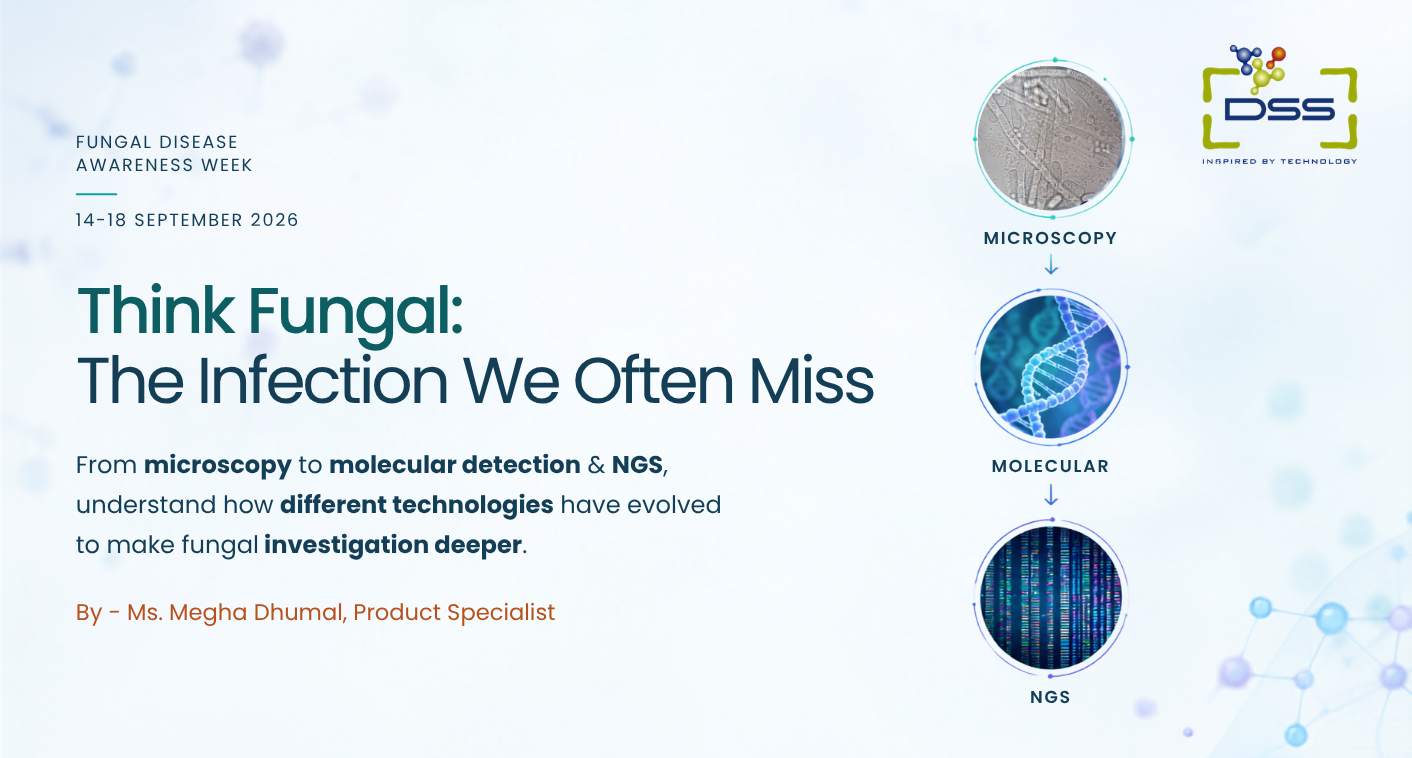
Think Fungal: The Infection We Often Miss
BY Megha Dhumal, Product Specialist 18th September 2026
Fungal Disease Awareness Week | 14–18 September 2026 2026 marks the 10th Annual Fungal Disease Awareness Week, highlighting a decade of efforts to raise awareness of fungal diseases and their...
Read More
Super-Resolution Microscopy: Upgrading to Abberior STEDYCON for Advanced Research
BY Dr. Anirban Bose (Ph.D.) Product & Application, Manager 5th September 2026
No matter how high-end your conventional fluorescence or confocal microscope is, there is a hard ceiling that eventually becomes incredibly frustrating. You could be trying to get a clear look...
Read More
How to Choose the Right Research Microscope
BY DSS Imagetech Pvt Ltd 14th August 2026
You’re standing there with a procurement form and a budget number. Someone circled in red, and down the hall a colleague is muttering that their old scope “still works fine,...
Read More