DSS: Redefining Biotechnology & Life Science in India































Olympus – An innovation of light for human welfare
The ultimate creation in this world is light. The knowledge that Light is a particle was realized by English physicist Sir Isaac Newton (1643 to 1727), known for his Law of Universal Gravitation that light had frequency-like properties when he used a prism to split sunlight into its component colors. Followed by Christiaan Huygens discovering the light speed; a Dutch scientist who first did the arithmetic to find a value for the speed of light equivalent to 131,000 miles per second. The electric light, one of the everyday conveniences that most affects our lives, was not “invented” in the traditional sense in 1879 by Thomas Alva Edison, although he could be said to have created the first commercially practical incandescent light.
October 12, 1919, witnessed the giant Olympus exploiting the light. Founded by Takachiho Seisakusho in Japan, they launched their first microscope “Asahi” in 1920. They have been providing stable, path-breaking innovations for the past 100 years with the slogan of “Making people Live healthier, safer, and more fulfilling” to the world. The recent trend in modern biology has been to study the light and biological matter interaction. This discipline is named biophotonics. It has evolved extensively over the past three decades. The Olympus microscope is an indispensable instrument to study photon-matter interactions. The advances in Olympus microscopy technologies have resulted in innovative and transformative tools to study and manipulate biological systems at the subcellular, cellular, tissue, and organ levels. Olympus has contributed extensively to the next-generation diagnostic, analytical, and therapeutic modalities of the 21st century. They listed their products in diverse life science applications.
Cell culture solutions: Olympus provides CKX53 microscope, CKX-CCSW as software to check the confluence, and cell counter model R1 as cell counter to decide how much to pass. It is the inverted microscope for cell culture usage for regular Fluorescence Expression Check, Recording, and Counting. The CKX-MVR cell culture holders enable us to move the position of containers easily. Especially for the 96 well microplates, observing well is displayed, and easy to understand the well positions. The cell counting software CKS-CCSW used to count the cells and Measure Cell Growth without peeling, Estimate cell number, and cell confluency. Counting cells in culture containers without peeling process and Counting cell clusters including iPS/ES colonies.
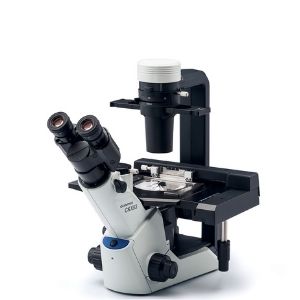
IX3 Series: There are two main systems for IX3 series IX73 and IX83.One for research by IXplore and one for clinical by IVF systems. IX83 is fully motorized and IX73 can configure up to semi-motorized systems. The Olympus IX3 microscope system brings greater efficiency to everything from casual observation to serious imaging. The large, open frame allows for the fitting of a motorized emission filter wheel within the infinity space of the microscope. There are 5 different deck units available with various modules. IX73-SLICSI system used to localize Quick spindle observation as an indicator for ICSI. This system mainly focuses on IVF Clinics which have many embryologists.
Upright Microscope (BX/CX/BX-WI):
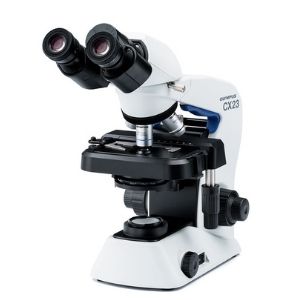
CX3 series: The CX23 is designed for educational institutions. It is a User-Friendly Design, Easy to use with Outstanding Optical Performance. The CX23 microscope is one of the lightest in its class, with a total weight of approx. 5.9 kg. There are two other alternatives available in this series CX33 & CX43.
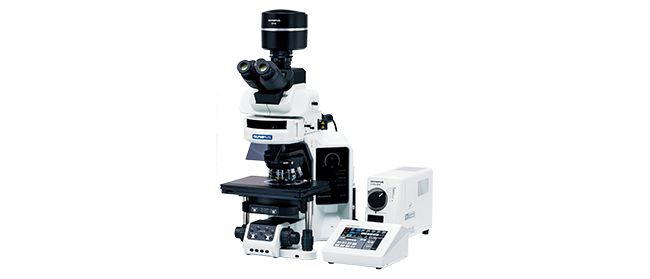
BX3 Series: BX3 is the modular microscope frame and enables configuration depending upon the customer’s needs. BX3 has 4 frames with different concepts/features and enables us to offer a suitable set up to the customers for an upright microscope. BX43 and BX46 are cost-effective microscopes and ergonomically designed microscope for routine works. BX53 is a high-grade manual system microscope and BX63 is a Motorized microscope, the flagship model of the BX3 series. The BX43, BX46 microscopes used for clinical applications, and BX53 and BX63 used for research purposes. BX3 series microscopes have an ergonomic design that helps keep users comfortable during extended periods and an intuitive control layout for fast, efficient observation and imaging. The BX43 microscope utilizes a high colour rendering white LED it provides a consistent colour temperature at any brightness level.
Latest Articles
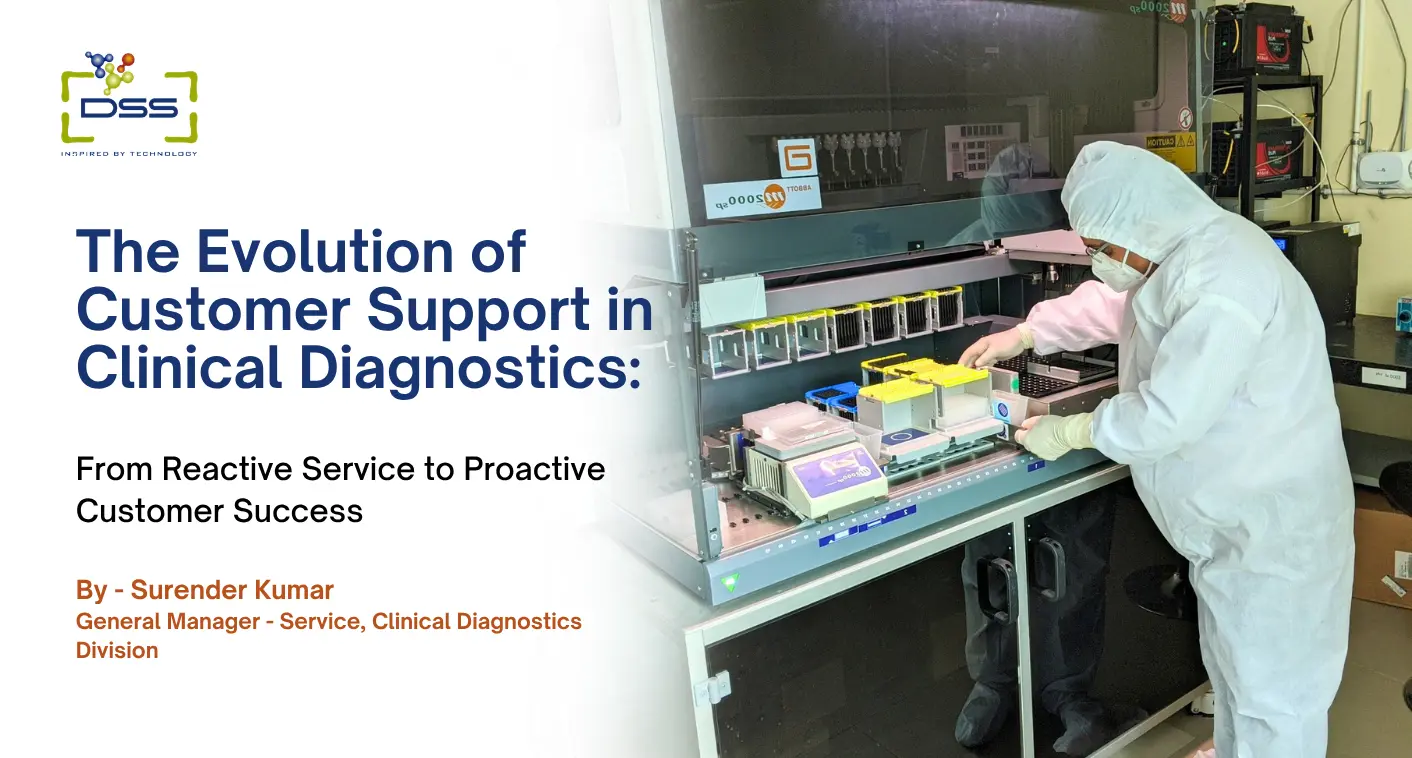
The Evolution of Customer Support in Clinical Diagnostics
BY Surender Kumar | General Manager – Service, Clinical Diagnostics Division 23rd July 2026
How Customer Expectations Have Changed Over the Last 20 Years “Customer Support is no longer a cost center—it is a competitive advantage.” Twenty years ago, customer support was primarily viewed...
Read More
The ROI of Lab Automation: How Automated Karyotyping Reduces Costs...
BY DSS Imagetech 13th July 2026
If you walk into almost any cytogenetics lab across India right now, you’ll probably hear the exact same complaint. Lab directors are staring at their monthly numbers, calculating just how...
Read More
Journey from Manual Testing to Automation powered by AI &...
BY Mr. Mahesh Semwal, Deputy General Manager (DGM) 29th June 2026
The diagnostics industry has witnessed a tremendous transformation over the last 25–30 years. Those who have been part of this journey have seen how diagnostics laboratories have moved from intensive...
Read More