DSS: Redefining Biotechnology & Life Science in India























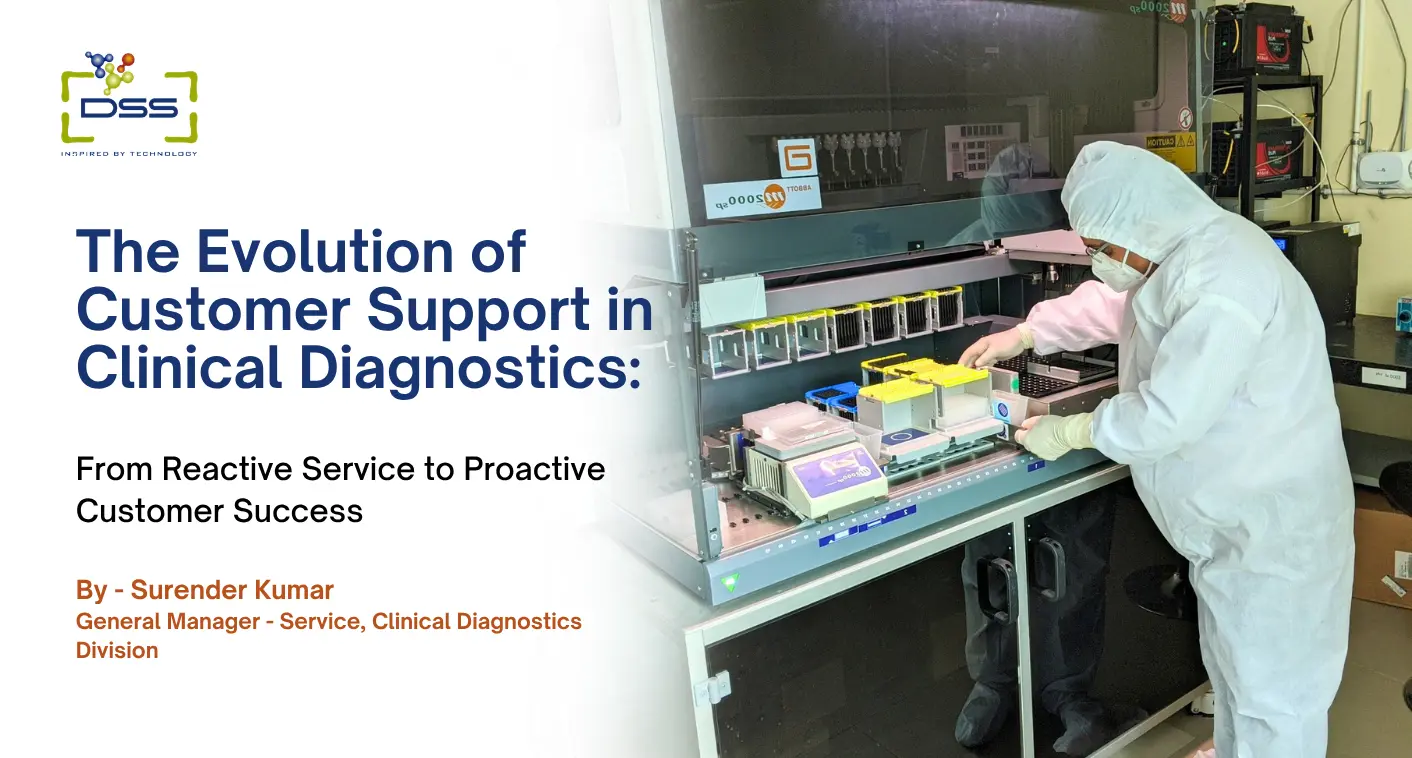
The Evolution of Customer Support in Clinical Diagnostics
How Customer Expectations Have Changed Over the Last 20 Years
“Customer Support is no longer a cost center—it is a competitive advantage.”
Twenty years ago, customer support was primarily viewed as a post-sales service. An instrument would fail, the customer would report the issue, and a service engineer would visit the site to repair the instrument and restore the laboratory operations. If the repair was completed within a few days, customers were generally satisfied.
Today, that mindset has totally changed.
In the Clinical Diagnostics industry, every hour of instrument downtime can delay patient reports and patient treatment, disturb laboratory workflow, impact hospital productivity, and affect patient report turnaround time.
Customer support is no longer measured only by the ability to repair an instrument. It is now measured by the ability to prevent instrument failures, maximise instrument uptime, and deliver a good customer experience.
Organisations that invest in customer support are no longer just improving service. They are strengthening customer loyalty, protecting recurring revenue, and building a sustainable competitive advantage.
Clinical Diagnostics Customer Support: Then vs Now
| Twenty Years Ago | Today |
|---|---|
| Engineer visit after instrument failure | Proactive monitoring and predictive maintenance |
| Telephone-based support | Omnichannel support through phone, email, WhatsApp, and remote access |
| Paper service reports | Digital CRM systems with real-time visibility |
| Customers accepted longer repair times | Customers expect an immediate response and quick resolution |
| Reactive maintenance | Preventive and predictive maintenance |
| Limited communication | Continuous updates and complete transparency |
| Success measured by repair completion | Success measured by uptime and customer experience |
| Annual customer reviews | Continuous engagement and partnership with the customer |
Service Engineers and Application Specialists in Modern Diagnostics Support
Today, support teams include both Service Engineers, also known as Field Service Engineers (FSEs), and Application Specialists, also known as Field Application Specialists (FASs).
| Service Engineer Role | Application Specialist Role |
|---|---|
| Technical repairs | Training laboratory staff on Good Laboratory Practices and workflow optimisation |
| Preventive and predictive maintenance | Advising on test protocols, assay setup, and troubleshooting clinical results |
| Maximising instrument uptime | Customising instrument configurations to meet laboratory needs |
| Supporting regulatory compliance and quality control processes | Supporting regulatory compliance and quality control processes |
| Maintaining instrument reliability and operational performance | Bridging the gap between technical functionality and clinical application |
Together, service engineers and application specialists deliver comprehensive customer support, ensuring instrument reliability and optimal clinical use.
The focus has shifted from simply repairing instruments to ensuring uninterrupted instrument and laboratory operations.
Why Customer Expectations Are Changing in Diagnostics Support
Several technological and business transformations have redefined customer expectations in the clinical diagnostics industry.
Digital Transformation in Diagnostics Customer Service
The widespread adoption of cloud computing, smartphones, Artificial Intelligence, and digital CRM platforms has changed how customers interact with service providers.
Customers can now:
- Track deliveries in real time.
- Monitor service requests online.
- Receive instant notifications.
- Access support anytime and anywhere.
As a result, customers expect the same level of transparency from diagnostic instrument manufacturers and suppliers.
Waiting several days for a status update is no longer acceptable.
Why Diagnostics Labs Need Time-Critical Instrument Support
Modern diagnostics laboratories process thousands of patient samples every day.
Laboratory microscopes and imaging systems, PCR systems, molecular analysers, histopathology platforms, and automated sample extraction systems have become mission-critical assets.
A single instrument failure can result in:
- Delays in patient reports.
- Increased laboratory sample backlogs.
- Technician overtime costs.
- Missed report turnaround-time deadlines.
- Reduced hospital productivity.
Customer support is no longer only about repairing a machine. It is about ensuring continuity of patient care.
Customers Compare Every Service Experience
Healthcare professionals are also customers.
Their expectations are influenced by companies such as:
- Amazon
- Apple
- Uber
These organisations have established new service standards, including:
- Immediate responses.
- Real-time tracking.
- Transparent communication.
- Personalised experiences.
Customers now expect similar service standards from medical and diagnostics companies.
What Modern Diagnostics Labs Expect from Customer Support
Today’s customers expect much more than technical expertise.
They expect:
- Immediate technical support from Field Service Engineers and expert clinical guidance from Application Specialists.
- The first response to occur within minutes rather than hours.
- Quick acknowledgement of complaints, even before the problem has been fully resolved.
- Clear information about the issue, assigned engineer, expected resolution time, and spare-parts status.
- Continuous updates until the issue has been resolved.
Acknowledging a complaint quickly builds customer confidence, even before the technical problem has been resolved.
Maximising Equipment Uptime: MTTR, FTFR and SLA Metrics
Hospitals and diagnostics laboratories purchase diagnostic instruments for reliable operations, not frequent repairs.
Modern customer support teams are increasingly measured using:
- Equipment availability: The percentage of time an instrument is available for laboratory use.
- Mean Time to Repair (MTTR): The average time required to repair an instrument and restore operations.
- First-Time Fix Rate (FTFR): The percentage of service issues resolved during the first engineer visit.
- Service-Level Agreement compliance: The percentage of cases resolved within committed service timelines.
The objective is no longer simply to repair equipment quickly. The objective is to avoid breakdowns altogether.
Predictive Maintenance for Diagnostic Instruments: Benefits and Data
Modern service organisations use data analytics to identify potential instrument failures before they occur.
Predictive maintenance enables organisations to:
- Reduce emergency service visits.
- Improve instrument reliability.
- Lower maintenance costs.
- Increase customer confidence.
- Schedule maintenance before critical components fail.
- Reduce disruption to routine laboratory workflows.
Industry studies have shown that predictive maintenance can reduce unplanned downtime by approximately 30–40% while lowering maintenance costs by approximately 15–40%.
Real-Time Service Transparency: Ticket Tracking and Status Updates
Customers no longer want to wonder, “Has anyone looked at my complaint?”
They expect access to:
- Service ticket tracking.
- Engineer assignment details.
- Spare-parts availability and dispatch status.
- Expected resolution time.
- Regular service updates.
- Digital service reports.
Transparency reduces customer anxiety, even when repairs take longer than initially expected.
Skilled FSE’s and FAS’s: Technical Expertise Meets Clinical Guidance
Technical expertise remains essential. However, customers now expect engineers and Application Specialists to do much more than repair equipment.
They are expected to:
- Explain technical issues clearly.
- Communicate professionally.
- Recommend preventive actions.
- Train laboratory technicians on instrument dos and don’ts.
- Understand the customer’s laboratory workflow.
- Conduct hands-on training for users.
- Provide ongoing education as new instrument features, assays, and software updates are released.
- Prepare laboratories for audits by providing the necessary training and documentation.
Today’s Service Engineer and Application Specialist are both technical experts and trusted advisers.
Data Shows Why Customer Experience Matters
Research consistently demonstrates the business impact of superior customer support.
- Companies that excel in customer experience often outperform competitors in customer retention and long-term profitability.
- Acquiring a new customer generally costs significantly more than retaining an existing customer.
- Many customers stop doing business with companies after repeated poor service experiences.
- Customers who receive proactive communication during service disruptions report higher satisfaction than those left without updates.
In the clinical diagnostics industry, retaining a satisfied customer often leads to:
- Additional instrument placements.
- Service contract renewals.
- Reagent sales.
- Positive customer references.
- Long-term partnerships.
Excellent service directly contributes to business growth.
How AI Is Transforming Customer Support in Clinical Diagnostics
Artificial Intelligence is transforming customer support across the clinical diagnostics industry.
Modern AI systems can:
- Predict component failures.
- Analyse instrument log files.
- Recommend troubleshooting steps.
- Automate service scheduling.
- Support remote diagnostics.
- Improve spare-parts planning.
- Identify recurring instrument issues.
- Provide service engineers with relevant technical information before a site visit.
AI will not replace Field Service Engineers.
Instead, it will make them faster, more informed, and more effective.
Human expertise combined with AI will define the future of technical support.
Essential Skills for Field Service Engineers and Application Specialists in 2026
Technical knowledge alone is no longer enough.
Modern customer support professionals require:
- Advanced troubleshooting skills.
- Effective communication skills.
- Customer relationship management skills.
- Data interpretation skills.
- Documentation discipline.
- Regulatory and compliance awareness.
- Continuous learning.
- Remote diagnostic capabilities.
- Workflow optimisation skills.
The engineer of the future is a problem solver, consultant, trainer, and customer advocate.
The Role of Molecular Diagnostics and Histopathology Support
The importance of customer support is particularly significant in specialised fields such as molecular pathology and diagnostics.
Instruments used for molecular testing, genomic analysis, cancer detection, infectious-disease testing, and personalised medicine require consistent maintenance, calibration, technical support, and application guidance.
For example, Real-Time PCR systems used in molecular diagnostics must operate consistently because delays or technical errors can affect critical patient test results.
Similarly, histopathology laboratories depend on reliable staining systems, tissue processors, embedding platforms, Immunohistochemistry systems, microscopes, and digital imaging tools.
In these environments, customer support must combine:
- Instrument repair and preventive maintenance.
- Application training.
- Workflow optimisation.
- Quality-control support.
- Regulatory documentation.
- Remote diagnostics.
- Assay and protocol troubleshooting.
The Future of Customer Support in Clinical Diagnostics
Customer expectations will continue to evolve.
Over the next decade, organisations should expect:
- AI-driven service operations.
- Fully connected IoT-enabled instruments.
- Remote predictive diagnostics.
- Automated spare-parts forecasting.
- Digital twins for troubleshooting.
- Outcome-based service contracts.
- Personalised customer experiences.
- Almost near-zero unplanned downtime.
- Greater integration between instruments, CRM systems, and laboratory information systems.
- More proactive customer training and workflow support.
Customer support will become increasingly data-driven, connected, and proactive.
Final Thoughts
After more than three decades in customer support for clinical diagnostics, I have witnessed this transformation firsthand.
Customers rarely remember how complex the technical problem was. They remember how quickly you responded, how effectively you communicated, and how confidently you solved their problems.
In today’s healthcare environment, customer support is not merely a service function. It is a strategic pillar of patient care, operational excellence, and business success.
Organisations that invest in proactive service, digital technologies, skilled professionals, and customer-centric processes will not only exceed customer expectations but will also lead the future of the diagnostics industry.
The future belongs to organisations that move from fixing problems to preventing problems, and from providing service to creating lasting customer success.
For information about diagnostic instruments, molecular pathology solutions, microscopy systems, and technical support, contact DSS Imagetech.
About the Author

He is presently working as General Manager – Customer Support in the IDD Division, heading PAN India service and application support operations for Molecular Diagnostics and Histopathology products.
He is leading a team of 15 people, including Service Engineers and Application Specialists, who provide high-quality customer support, technical expertise, and application assistance across the country.
He has over 34 years of experience in Customer Support and Technical Service within the Life Sciences, Diagnostics, and Medical Devices industry.
Throughout his career, he has gained extensive hands-on experience with a broad range of laboratory instruments and technologies, including:
- Microscopes: Upright, Stereo Zoom, Inverted, Fluorescence, Metallurgical, Confocal, IVF, and Digital Imaging Systems.
- Life Science Instruments: Microarray Systems, Proteomics Platforms, and Gel Documentation Systems.
- Molecular Diagnostics: Real-Time PCR Systems, automated RNA/DNA extraction systems, and molecular diagnostic workflows.
- Histopathology Instruments: Immunohistochemistry systems, H&E staining systems, tissue processors, embedding systems, CO₂ incubators, and other histopathology laboratory equipment.
“I truly believe that the best customer support is not just repairing instruments, but establishing confidence, developing long-term partnerships, and helping laboratories deliver reliable patient care and scientific excellence.”
FAQ’s :-
1. How has customer support in clinical diagnostics changed over the last 20 years?
Customer support has evolved from reactive, post-failure repairs to proactive monitoring, preventive maintenance, remote diagnostics, predictive maintenance, and continuous customer engagement. Modern support focuses on maximising instrument uptime and ensuring uninterrupted laboratory operations.
2. Why is instrument uptime important in clinical diagnostics?
Instrument downtime can delay patient reports, increase sample backlogs, disrupt laboratory workflows, increase staff overtime, and affect patient treatment decisions. Maximising uptime helps laboratories maintain productivity and deliver reports within the required turnaround time.
3. What is the difference between a Service Engineer and an Application Specialist?
A Service Engineer focuses mainly on technical repairs, preventive maintenance, and instrument reliability. An Application Specialist provides assay guidance, user training, workflow optimisation, clinical troubleshooting, and support for quality-control and regulatory processes.
4. What is predictive maintenance in diagnostic instruments?
Predictive maintenance uses instrument data, service history, analytics, and AI to identify signs of potential component failure before the equipment breaks down. This allows maintenance to be scheduled proactively and reduces unplanned downtime.
5. What do MTTR and FTFR mean in diagnostics customer support?
MTTR means Mean Time to Repair and measures how long it takes to restore an instrument after a failure. FTFR means First-Time Fix Rate and measures how often a service problem is successfully resolved during the first engineer visit.
6. How is AI transforming diagnostics customer support?
AI can analyse instrument log files, predict component failures, recommend troubleshooting actions, automate service scheduling, support remote diagnostics, and improve spare-parts planning. It helps service engineers respond faster and make better-informed decisions.
7. Will AI replace Field Service Engineers?
No. AI is expected to support Field Service Engineers rather than replace them. Human expertise remains essential for technical judgement, physical repairs, customer communication, training, workflow understanding, and clinical application support.
8. What support do modern diagnostics laboratories expect?
Modern laboratories expect immediate acknowledgement, expert technical and clinical guidance, clear communication, ticket tracking, regular updates, preventive maintenance, remote support, rapid resolution, and transparent information about spare parts and service timelines.
9. Why is customer experience important for diagnostics companies?
A strong customer experience improves trust, customer retention, service contract renewals, reagent sales, instrument placements, positive referrals, and long-term partnerships. Excellent customer support therefore contributes directly to sustainable business growth.
10. What is the future of clinical diagnostics customer support?
The future will include AI-driven service operations, IoT-enabled instruments, digital twins, predictive diagnostics, automated spare-parts forecasting, personalised support, remote troubleshooting, and almost near-zero unplanned downtime.
Latest Articles
Think Fungal: The Infection We Often Miss
BY Megha Dhumal, Product Specialist 18th September 2026
Fungal Disease Awareness Week | 14–18 September 2026 2026 marks the 10th Annual Fungal Disease Awareness Week, highlighting a decade of efforts to raise awareness of fungal diseases and their...
Read More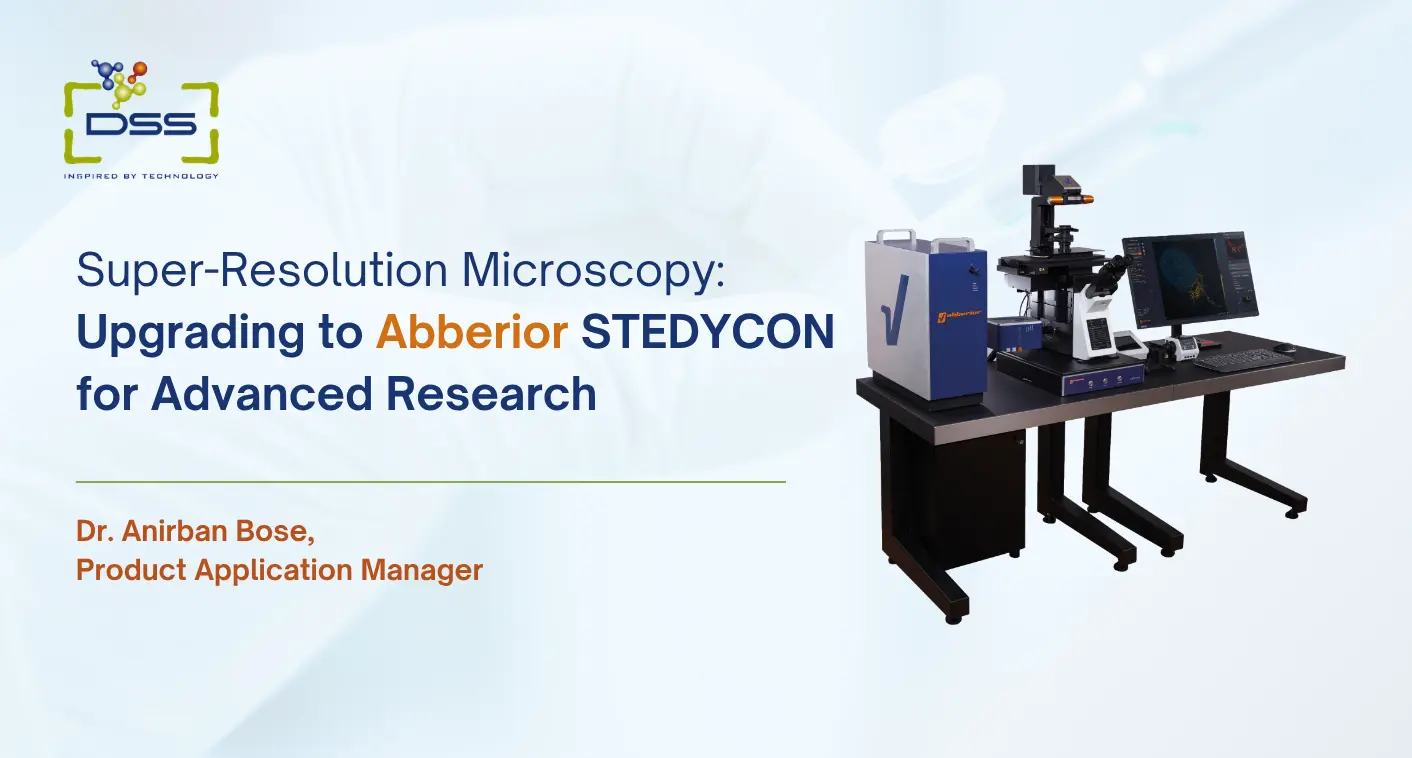
Super-Resolution Microscopy: Upgrading to Abberior STEDYCON for Advanced Research
BY Dr. Anirban Bose (Ph.D.) Product & Application, Manager 5th September 2026
No matter how high-end your conventional fluorescence or confocal microscope is, there is a hard ceiling that eventually becomes incredibly frustrating. You could be trying to get a clear look...
Read More
How to Choose the Right Research Microscope
BY DSS Imagetech Pvt Ltd 14th August 2026
You’re standing there with a procurement form and a budget number. Someone circled in red, and down the hall a colleague is muttering that their old scope “still works fine,...
Read More